The music industry has always evolved alongside technology. From vinyl to streaming, from analog studios to digital workstations, each innovation has reshaped how music is created, distributed, and experienced. Today, a far more radical transformation is underway—one that challenges long-held ideas about artistry, identity, and performance. AI singer personas are no longer experimental novelties or background tools. They are becoming fully realized musical identities with voices, styles, personalities, and fan communities of their own. These artificial performers are not simply software that generates sound. They are digital artists designed to sing, emote, interact, and evolve. As they enter mainstream culture, AI singer personas are redefining what it means to be a musician, who gets to perform, and how music careers are built in the modern era.
A: They can be treated like artists if the identity is consistent, credited, and audiences understand how it’s made.
A: Some use-cases will shift, but human performance, fandom, and live charisma remain powerful differentiators.
A: Lock core presets (tone, vibrato, vowel shapes), keep reference tracks, and document your “persona bible.”
A: Over-perfecting—natural breath, micro-dynamics, and tiny imperfections often make it believable.
A: Be clear in credits/notes and avoid implying a human performed it if they didn’t—transparency protects trust.
A: Avoid lookalike/clone behavior and only use voices you have rights to—consent and licensing matter.
A: Direct it like a singer: mark emphasis words, shape breaths, vary intensity per line, and automate dynamics.
A: Ownership depends on your agreements, sources, and jurisdiction—use licensed data and written contracts.
A: Tame harsh sibilance with de-essing, soften plosives, and adjust consonant intensity/attack in the model controls.
A: Build one persona, make 3–5 tracks, refine the identity, then expand into remixes, features, and alternate moods.
The Rise of the Artificial Artist
AI singer personas emerged from a convergence of technologies that matured almost simultaneously. Advances in machine learning, neural voice synthesis, natural language processing, and real-time animation made it possible to create singing voices that sound expressive, emotional, and stylistically authentic. What once felt robotic now feels human—sometimes indistinguishably so.
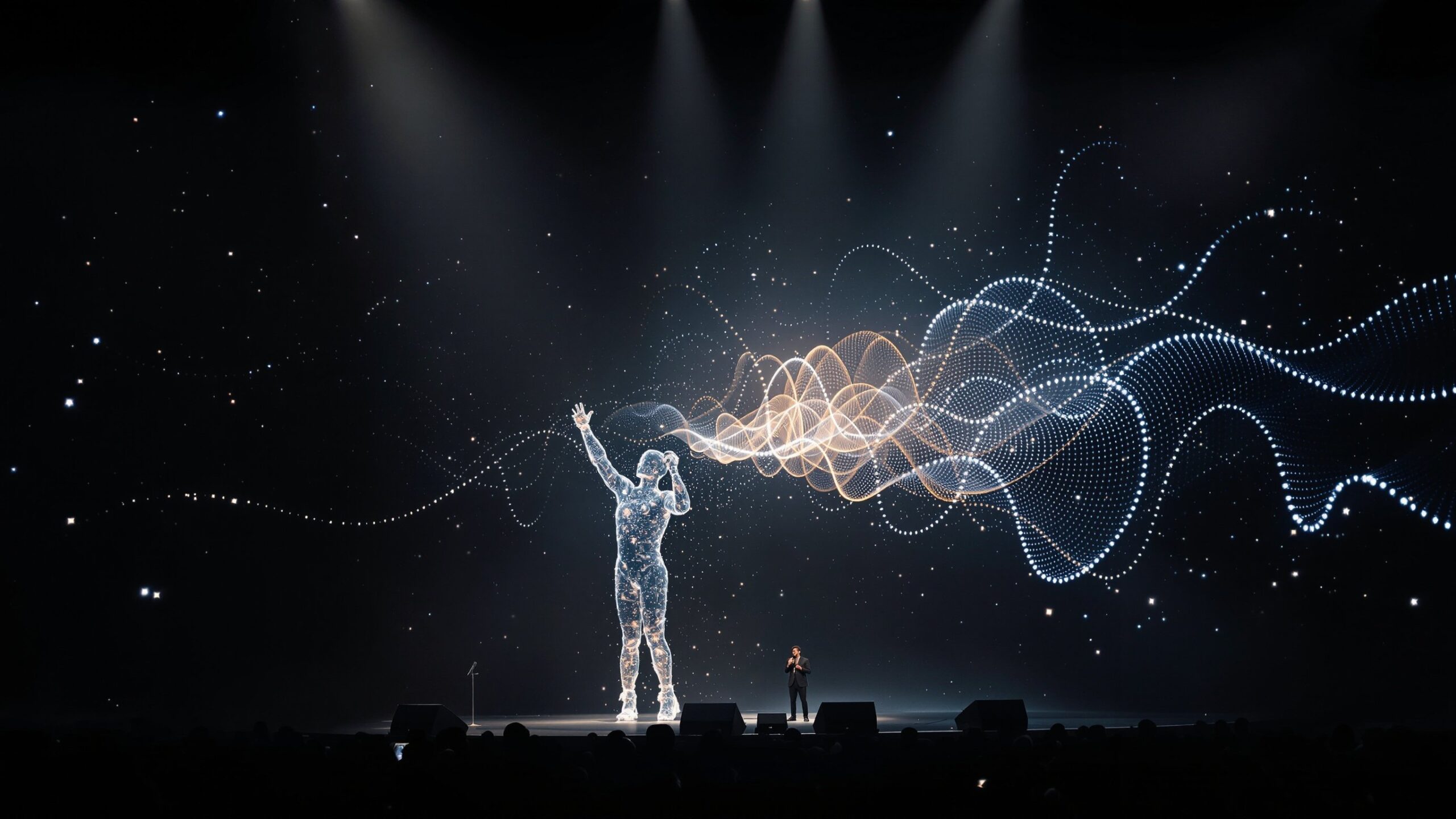
Early virtual singers proved that audiences were open to non-human performers. The global popularity of Hatsune Miku demonstrated that fans could emotionally connect with a character whose voice was entirely synthesized. Concerts featuring holographic performances sold out arenas, revealing that presence and connection did not require a flesh-and-blood performer.
Today’s AI singer personas go far beyond those early systems. They can adapt their vocal tone to different genres, generate lyrics in response to prompts, and release new music at a pace impossible for human artists. They are not limited by vocal fatigue, scheduling conflicts, or aging. Instead, they exist as continuously evolving creative entities.
Redefining What a “Singer” Is
Traditionally, a singer has been defined by physical presence and biological voice. AI singer personas disrupt that definition entirely. The voice is no longer bound to a human body, and identity is no longer singular or fixed.
An AI persona can have multiple stylistic incarnations—one day releasing an ethereal ambient track, the next delivering aggressive hip-hop verses. The same voice can be re-tuned, re-aged, or re-characterized without losing continuity. This flexibility allows creators and labels to treat singers as modular creative platforms rather than fixed individuals.
This shift raises philosophical questions, but it also unlocks creative freedom. Music becomes less about preserving a performer’s limitations and more about exploring sonic ideas without restriction. AI singers are not replacing human musicians; they are expanding the definition of musical performance itself.
From Tools to Personalities
What truly sets AI singer personas apart from traditional vocal software is personality. These are not faceless generators producing anonymous tracks. They are branded identities with names, aesthetics, backstories, and emotional arcs.
Modern AI personas can interact with fans on social platforms, respond to comments, and even adjust their musical direction based on audience feedback. This interaction creates a feedback loop between listener and performer that feels surprisingly intimate. Fans are not just consuming music; they are shaping the evolution of the artist.
Virtual performers like FN Meka illustrate how personality-driven AI artists can spark both enthusiasm and controversy. These projects show that when AI personas enter cultural conversations, they are judged not only on musical quality but on values, representation, and authenticity—just like human artists.
Speed, Scale, and Creative Velocity
One of the most disruptive aspects of AI singer personas is their speed. Traditional music production involves lengthy cycles of writing, recording, mixing, and promotion. AI personas can compress this entire process into days or even hours.
This accelerated workflow allows for rapid experimentation. Producers can test dozens of musical directions without committing months of studio time. If a track resonates, the AI persona can release follow-ups immediately, sustaining momentum in a way few human artists can manage.
At scale, this changes how music catalogs are built. Instead of a limited discography, AI singers can generate expansive bodies of work across genres, moods, and languages. Music becomes more adaptive, responding to trends in real time rather than chasing them months later.
The New Economics of Music Creation
AI singer personas are reshaping the business side of music just as dramatically as the creative side. The cost of producing high-quality vocals drops significantly when studios, session singers, and touring logistics are no longer required.
This democratization benefits independent creators who lack access to traditional industry resources. A small team—or even a single creator—can launch a global music brand with minimal overhead. At the same time, major labels see AI personas as scalable intellectual property that can generate consistent revenue without the unpredictability of human careers.
Licensing models also evolve. An AI singer’s voice can be licensed for collaborations, advertising, games, and films without scheduling conflicts or contractual disputes over performance. This efficiency makes AI personas attractive partners in a media ecosystem that values speed and flexibility.
Creative Collaboration Without Boundaries
Rather than replacing human musicians, AI singer personas often act as collaborators. Producers, songwriters, and composers use them as creative partners capable of interpreting ideas instantly.
A songwriter can test how lyrics sound across different vocal styles without hiring multiple singers. A producer can blend human vocals with AI harmonies to create textures that would be difficult to achieve otherwise. This hybrid approach results in music that feels both familiar and futuristic.
Importantly, AI singers allow creators who cannot sing—or who sing in limited ranges—to express musical ideas fully. This inclusivity expands who gets to participate in music creation, breaking down long-standing barriers tied to physical ability or access.
Virtual Performances and the Future of Concerts
Live performance has always been central to music culture, and AI singer personas are redefining what “live” means. Virtual concerts featuring digital avatars can be staged anywhere in the world simultaneously, reaching massive audiences without travel.
These performances blend music with gaming, animation, and immersive storytelling. Fans attend concerts in virtual worlds, customize their viewpoints, and interact with the performer in ways impossible at physical venues. The experience becomes participatory rather than observational.
For artists and labels, virtual concerts eliminate many logistical risks while opening new revenue streams. Merchandise, exclusive content, and interactive experiences can be integrated directly into the performance environment.
Authenticity in the Age of Artificial Voices
One of the most debated questions surrounding AI singer personas is authenticity. Can a non-human artist be “real”? The answer increasingly depends on how authenticity is defined.
For many fans, authenticity comes from emotional resonance rather than biological origin. If a song moves listeners, tells a compelling story, or reflects shared experiences, its source matters less. AI personas can be authentic in intention, even if they are artificial in construction.
Transparency plays a crucial role. Audiences respond more positively when AI artists are clearly presented as synthetic rather than deceptive replacements for humans. When positioned as new forms of expression, AI singers are embraced as part of music’s ongoing evolution.
Ethical and Cultural Challenges
Despite their potential, AI singer personas raise serious ethical considerations. Voice ownership, cultural representation, and creative credit are complex issues that demand thoughtful frameworks.
Using AI to replicate or approximate human voices without consent risks exploitation. Similarly, designing AI personas that appropriate cultural identities without sensitivity can reinforce stereotypes. The industry must establish standards that protect creators while encouraging innovation.
These challenges are not reasons to reject AI singers but signals that governance must evolve alongside technology. Clear attribution, ethical licensing, and inclusive design practices will shape whether AI personas become empowering tools or controversial shortcuts.
The Globalization of Music Through AI
AI singer personas accelerate the globalization of music by removing language and cultural barriers. A single persona can sing fluently in multiple languages, adapt to regional styles, and release localized content instantly. This capability allows music to travel faster and farther than ever before. Emerging markets gain access to customized content, while global audiences discover hybrid genres that blend influences seamlessly. As a result, the concept of a “local” artist expands. AI personas exist everywhere at once, reflecting a truly global music culture shaped by shared digital spaces rather than geographic boundaries.
What the Future Holds
AI singer personas are not a passing trend. They represent a structural shift in how music is imagined, produced, and consumed. As technology advances, these digital artists will become more expressive, more interactive, and more deeply integrated into everyday culture.
Human musicians will continue to matter—perhaps more than ever—but their role will evolve. Creativity will increasingly lie in designing experiences, narratives, and collaborations that blend human emotion with artificial precision.
The music industry has always been about connection. AI singer personas do not eliminate that connection; they reshape it. By challenging assumptions about voice, identity, and performance, they open a future where music is not limited by biology, geography, or time. In that future, the line between human and artificial artistry becomes less important than the stories we tell and the sounds that move us.