
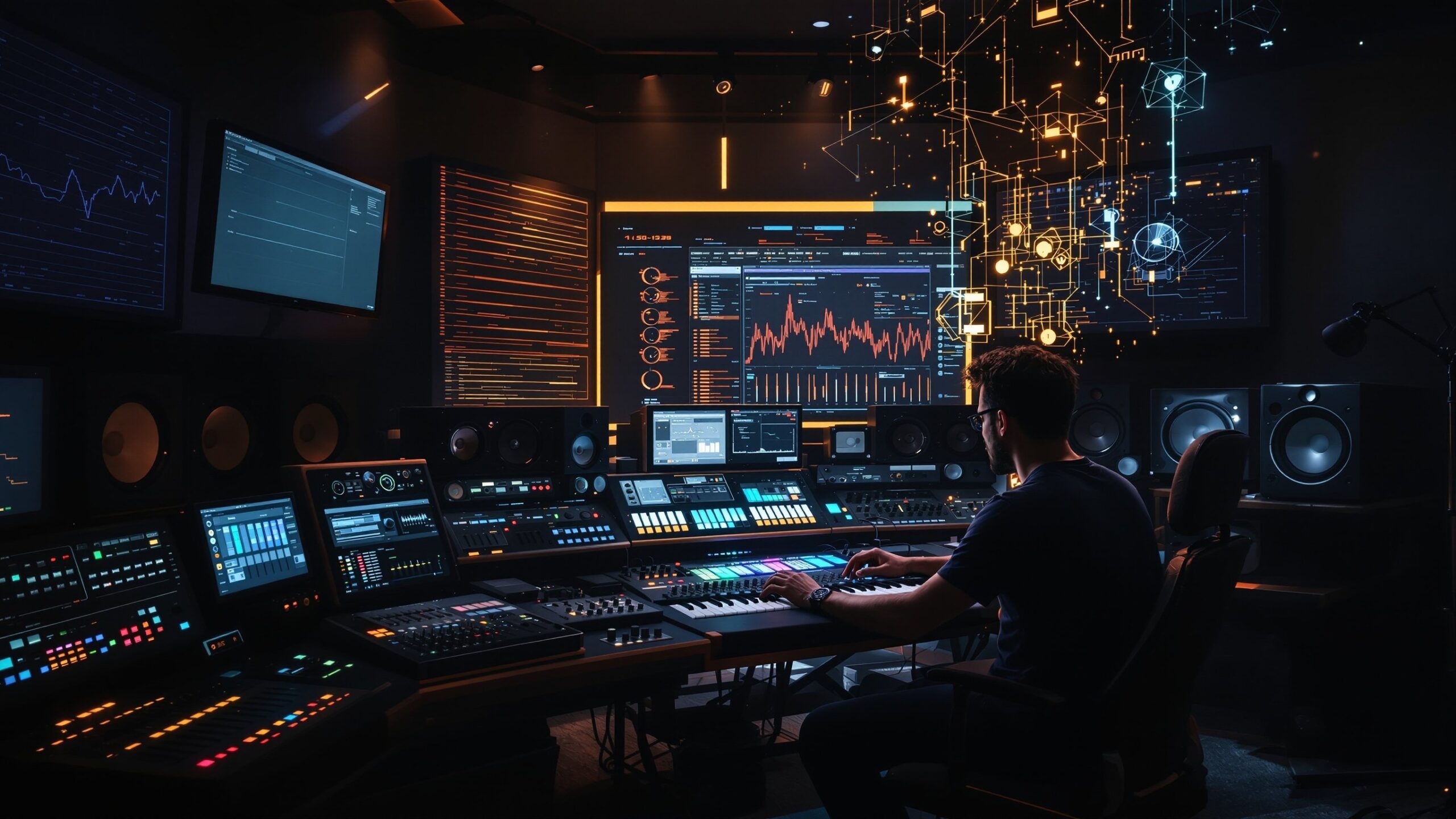
Studio Adoption of AI is transforming the modern music studio into a faster, smarter, and more creatively flexible environment. What once required massive budgets, large teams, and endless studio hours can now be achieved with intelligent tools that assist at every stage of production. From AI-powered composition and sound design to automated mixing, mastering, and vocal enhancement, artificial intelligence is reshaping how music is created, refined, and released. This category explores how studios—home, independent, and professional—are integrating AI into daily workflows to boost efficiency without sacrificing artistic identity. You’ll discover how producers use AI to spark ideas, engineers rely on machine learning for precision audio processing, and artists collaborate with intelligent systems to push genre boundaries. We also examine how AI lowers barriers to entry, enabling smaller studios and solo creators to compete with major production houses. Whether you’re curious about cutting-edge studio tools, ethical debates around AI creativity, or real-world adoption strategies, Studio Adoption of AI offers a forward-looking view into the future of music production—where human vision and machine intelligence create together.
A: It usually replaces repetitive tasks first; taste, direction, and relationship still lead the session.
A: Great for fast drafts and loudness targets—top releases still benefit from a human final pass.
A: It can rescue noise and room issues, but it can’t restore emotion or detail that wasn’t captured.
A: Cloud is convenient; local is better for privacy and latency—many studios use a hybrid approach.
A: Only if pushed too hard—blending processed with original and keeping edits subtle preserves realism.
A: Yes—get explicit written consent and clarify where and how it’ll be used.
A: Use clean inputs, avoid stacking multiple AI processors, and always A/B check on headphones and monitors.
A: It can spark chords/lyrics/melodies, but the strongest results come from human curation and intent.
A: Many teams welcome faster turnaround, but they still care about originality, rights, and quality control.
A: Begin with AI cleanup on vocals and a reference-based mix check—low risk, high reward.