

AI EDM & Dance is where high-energy beats collide with intelligent creativity, reshaping how electronic music is imagined, produced, and performed. This category dives into the pulse of AI-powered rhythm—where algorithms generate drops that hit harder, synths evolve in real time, and dancefloor energy is engineered with precision. From AI-assisted beatmaking and generative melodies to futuristic sound design and automated remixing, this space explores how technology is amplifying human creativity rather than replacing it. Here, you’ll discover how producers use AI to craft festival-ready anthems, experiment with new sub-genres, and push BPM boundaries without losing groove or emotion. We explore tools that help sculpt basslines, predict crowd reactions, and inspire unexpected musical directions—perfect for bedroom creators and professional DJs alike. You’ll also find insights into the cultural impact of AI on club music, live performances, and global dance trends. Whether you’re chasing euphoric builds, hypnotic techno loops, or next-gen house vibes, AI EDM & Dance is your gateway to the future of movement, sound, and digital rhythm—where every beat is smarter, bolder, and built to move bodies.
A: Use AI for drafts (MIDI, fills, alt hooks), then resample, re-arrange, and re-automate for your signature.
A: Build an 8-bar drop loop first, then create intro/break/outro around that core.
A: Keep kick/sub mono, avoid overlapping sub notes, and use sidechain or volume shaping for separation.
A: Yes—tune kick/bass to the song’s tonal center (or a safe interval) to avoid “random” low-end clashes.
A: Contrast: remove low end in the build, simplify drums, then reintroduce bass + full drums at the drop.
A: Commonly 16–32 bars each, with clear beat-only sections for mixing.
A: It can be a solid starting point—compare to references, check peaks, and adjust mix issues before relying on it.
A: Layer: keep a mono core, widen a top layer, and watch mono compatibility to avoid phase collapse.
A: No “story”—use builds, breaks, and resets so the track evolves instead of looping endlessly.
A: High-pass non-bass elements, tame 200–400 Hz buildup, and keep reverbs filtered and controlled.

How AI Is Transforming EDM: The Future of Electronic Dance Music
A focused explainer on dance energy, drops, and machine-speed iteration, written for DJs, festival producers, remixers, and electronic fans, with attention to creative choices, risks, credits, and musical identity.

AI EDM Music: How Artificial Intelligence Is Creating Club Hits
A focused explainer on hit mechanics and dancefloor proof, written for club producers, playlist curators, topliners, and DJs, with attention to creative choices, risks, credits, and musical identity.
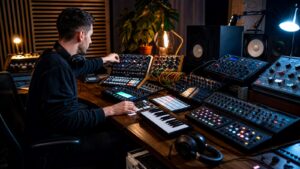
Best AI Tools for Creating EDM and Dance Music in 2026
A focused explainer on choosing EDM tools by workflow rather than brand noise, written for bedroom producers, DJs, remixers, and release-focused artists, with attention to creative choices, risks, credits, and musical identity.