The rise of AI singer personas has ignited one of the most fascinating debates in modern music culture. Synthetic voices that can sing with emotional nuance, stylistic precision, and even invented personalities are no longer experimental novelties—they are charting songs, starring in virtual concerts, and building fan communities. As these digital performers become more convincing, a central question keeps resurfacing: will AI singer personas eventually replace human artists, or are they destined to become powerful collaborators instead? This question reaches far beyond technology. It touches creativity, identity, economics, ethics, and the emotional core of why people connect to music in the first place. To understand where AI singers are heading, we must explore not only what they can do, but what music truly represents to listeners and creators alike.
A: In some commercial contexts they can substitute vocals, but “artist” also includes identity, story, performance, and cultural connection.
A: Demos, harmony stacks, genre experiments, and fast iteration—then refine with human taste and mix decisions.
A: Focus on phrasing: timing, breath, consonants, and dynamics—plus subtle room/analog texture.
A: It’s smart for audience trust and often required by platform/label policies; transparency reduces backlash risk.
A: Risky—recognizable imitation can still be identity misuse. Prefer original personas or licensed voices.
A: Songwriters, producers, and any licensed voice/model contributors—plus clear notes if a persona is used as a performer identity.
A: Yes—treat it like a character role with consistent sonic rules, artwork, and documented rights.
A: Shipping endless versions. Set a creative brief, pick a direction, and commit like you would with a human session.
A: Using unlicensed voice likeness or unclear training provenance—keep permission and documentation tight.
A: Humans own meaning and intent; the persona supplies performance options—your taste is the final instrument.
The Emergence of AI Singer Personas
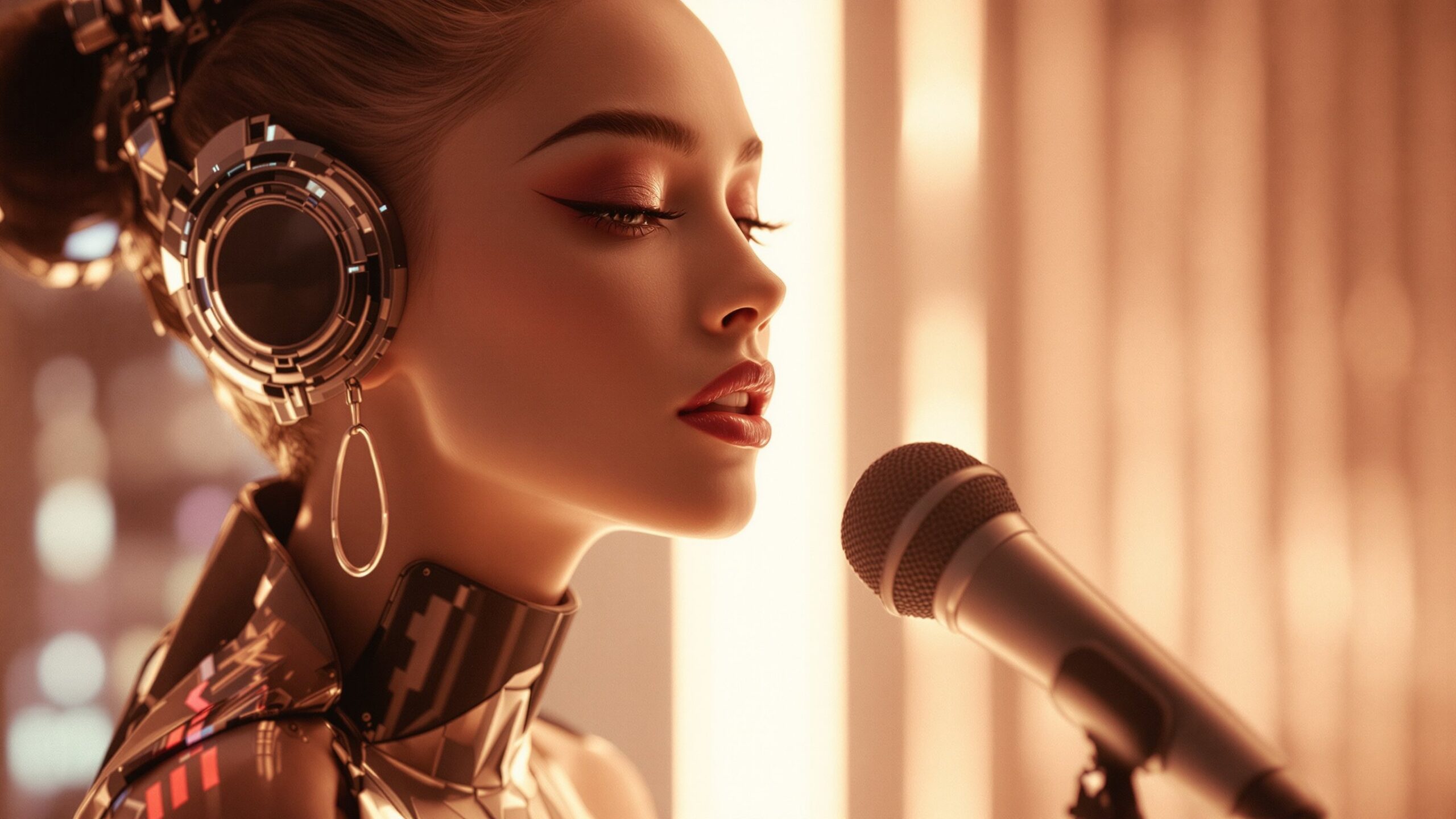
AI singer personas are not just voices generated by algorithms. They are carefully constructed digital performers that combine vocal synthesis, personality design, visual identity, and narrative branding. Unlike early text-to-speech systems or robotic vocal effects, today’s AI singers are trained on vast datasets of vocal performances, musical phrasing, and stylistic patterns. The result is a voice that can sing naturally, adapt to genres, and convey mood with startling realism.
What elevates these systems into “personas” is the layer of storytelling wrapped around them. Developers and artists assign names, backstories, aesthetic styles, and even evolving personalities to these voices. Fans are not just listening to a sound; they are engaging with a character that exists across songs, visuals, and online spaces. This mirrors the way human artists cultivate public identities—but with a key difference: AI personas can be endlessly refined, updated, and reimagined without the limits of human aging, fatigue, or availability.
Why AI Singers Feel So Compelling
The appeal of AI singer personas lies partly in consistency and control. Human artists are unpredictable. Their voices change over time, their schedules are limited, and their creative output can fluctuate. AI singers, by contrast, can perform flawlessly at any time, in any style, and across any language with minimal friction.
There is also a sense of novelty and futurism that attracts audiences. For younger listeners raised on virtual worlds, gaming avatars, and digital influencers, the idea of a non-human performer does not feel strange—it feels natural. AI singers fit seamlessly into a cultural landscape where identity is fluid and digital presence can be just as meaningful as physical presence.
At the same time, AI voices can be engineered to sit perfectly within modern production trends. They can hit precise pitches, maintain ideal tone, and adapt instantly to feedback. In a music industry that increasingly values efficiency and scalability, these traits are undeniably attractive.
The Fear of Replacement
Despite their advantages, AI singer personas have sparked anxiety among musicians and fans alike. The fear is not irrational. History shows that automation reshapes creative industries, often displacing certain roles while creating new ones. If an AI voice can deliver a hit song without a human singer, what happens to aspiring vocalists struggling to be heard?
This concern is amplified by economic realities. Labels, advertisers, and content platforms may see AI singers as lower-risk investments. They do not demand royalties in the traditional sense, cannot break contracts, and do not generate scandals. In a purely commercial framework, AI performers appear efficient and controllable.
For some, this raises existential questions about the value of human artistry. If a machine can replicate the sound of emotion, does authenticity still matter? If listeners cannot tell the difference, does the difference matter at all?
What AI Still Cannot Replace
While AI singer personas are impressive, they are not human—and that distinction matters more than it may seem. Music is not just about sound; it is about lived experience. Human singers bring personal histories, cultural contexts, and emotional truths that shape how songs are written, performed, and received.
A human voice carries subtle imperfections that reflect vulnerability and growth. Cracks, breaths, and unplanned variations often become the moments listeners cherish most. These elements are not errors; they are signals of authenticity. AI systems can simulate imperfection, but simulation is not the same as experience.
Moreover, audiences often form deep emotional bonds with artists because they see themselves reflected in their struggles and stories. Concerts, interviews, and live performances create shared moments that extend beyond the music itself. An AI persona can tell a story, but it does not live one in the human sense.
Collaboration as the Real Disruption
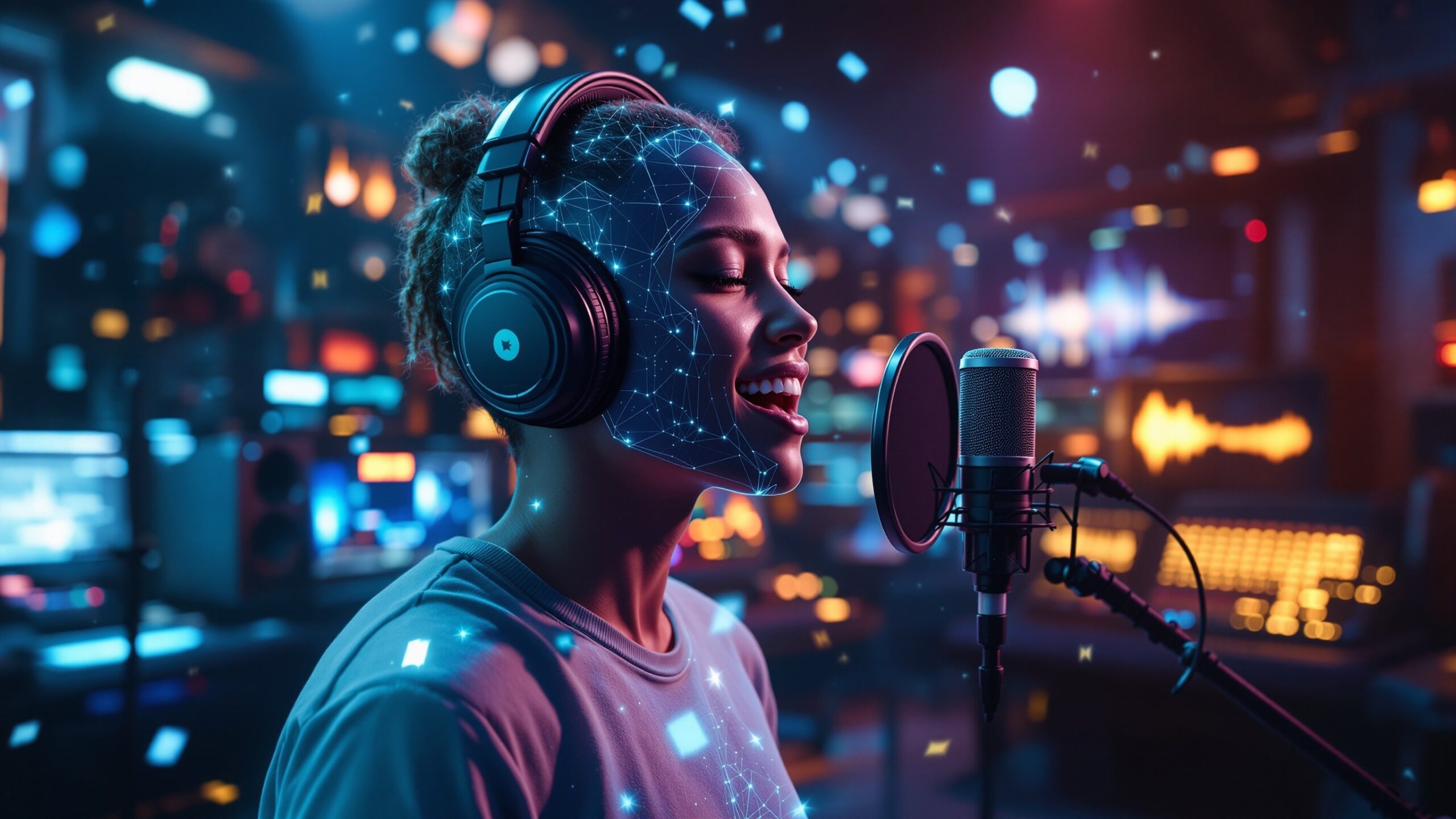
Rather than replacing human artists, AI singer personas are increasingly finding their strongest role as collaborators. In this model, AI becomes a creative partner rather than a competitor. Artists can use AI voices to explore new sonic textures, experiment with alternate vocal styles, or build layered harmonies that would be difficult to achieve otherwise.
For producers, AI singers can serve as rapid prototyping tools. A songwriter can test melodies and lyrics instantly, adjusting tone and delivery before involving a human vocalist. This accelerates the creative process without eliminating the human element.
Some artists are also using AI personas as extensions of their own identity. A human singer might release music both under their real name and through a digital alter ego, allowing them to explore different genres or concepts without being constrained by audience expectations. In this way, AI becomes a mask, a canvas, or a creative amplifier rather than a replacement.
New Creative Possibilities
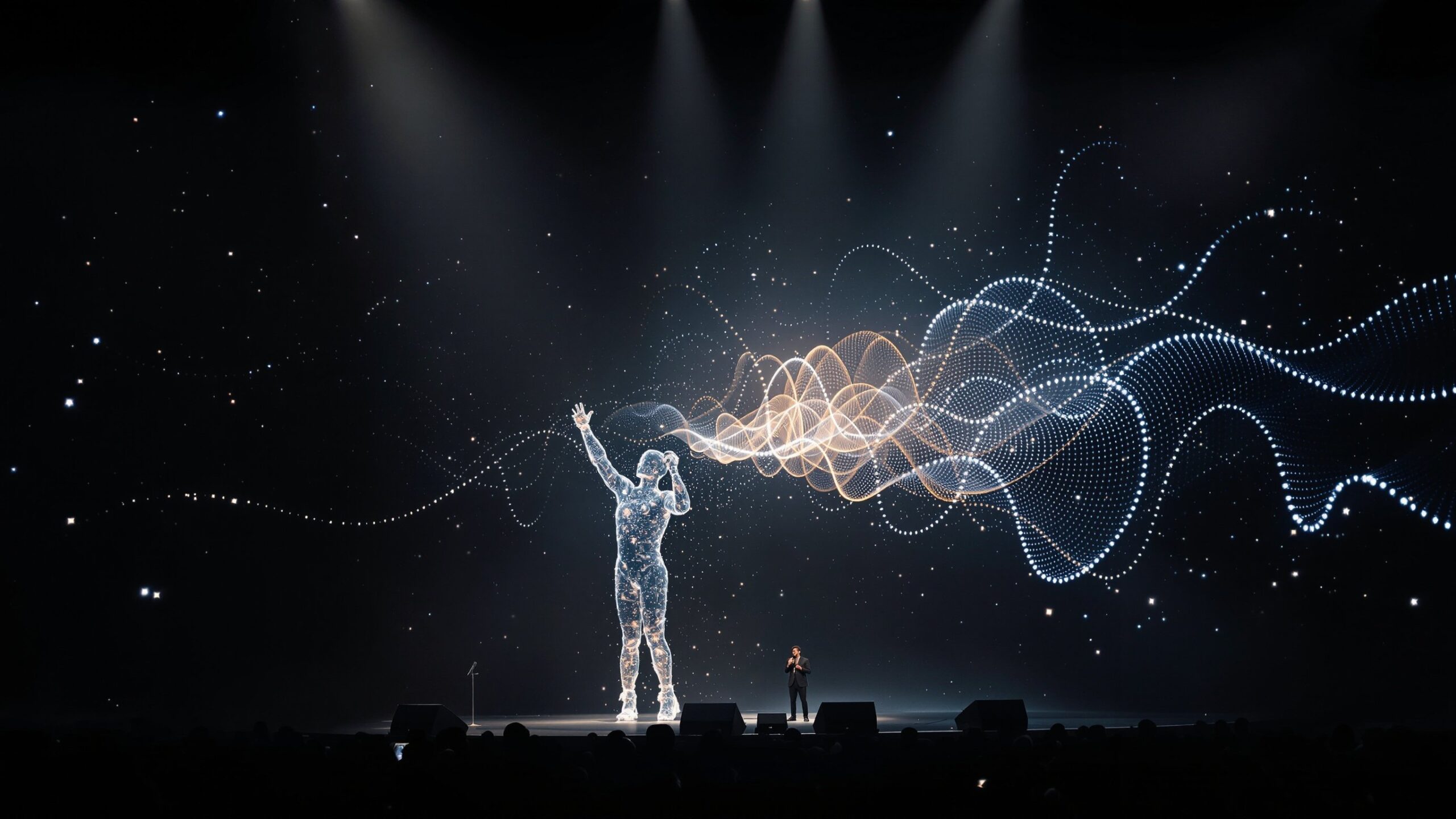
AI singer personas open doors to musical ideas that were previously impractical or impossible. Songs can be performed in multiple languages with consistent vocal identity, enabling truly global releases. Virtual duets between human artists and AI personas can transcend time and geography. Entire albums can be built around fictional worlds, with AI singers acting as characters within a narrative arc. This expands the definition of what an “artist” can be. Creativity shifts from solely performing vocals to designing experiences—voices, visuals, stories, and interactive elements woven together. In this sense, AI does not diminish creativity; it redistributes it.
Ethical and Cultural Considerations
As AI singer personas grow more prominent, ethical questions become unavoidable. Who owns an AI voice? If it is trained on human singers, how are those contributions acknowledged or compensated? Transparency matters, especially when audiences may not realize they are listening to a synthetic performer.
There is also the risk of cultural flattening. If AI models are trained primarily on dominant musical styles, they may reinforce existing trends rather than challenge them. Human artists often drive innovation by reacting to social change, personal hardship, or cultural movements—forces that AI does not experience firsthand.
Responsible development requires clear boundaries, fair licensing practices, and open communication with audiences. When used thoughtfully, AI can support diversity rather than suppress it.
The Listener’s Perspective
Ultimately, the fate of AI singer personas depends on listeners. Music is a relationship between creator and audience, and audiences are not purely rational consumers. They respond to emotion, connection, and meaning. Some listeners may fully embrace AI performers, appreciating them as digital art forms in their own right. Others may prefer human voices precisely because they are human. Importantly, these preferences do not have to compete. Just as electronic music did not eliminate acoustic instruments, AI singers are unlikely to erase human artists. Instead, they add another layer to the musical ecosystem.
A Future of Coexistence
The most realistic future is not one of replacement, but coexistence. Human artists will continue to define cultural moments, tell personal stories, and connect with audiences through shared humanity. AI singer personas will expand the creative toolkit, enabling new forms of expression and collaboration.
Rather than asking whether AI can replace human singers, a better question may be how artists and audiences choose to use this technology. When guided by creativity rather than fear, AI becomes less of a threat and more of an invitation—to rethink what music can be and who gets to shape it.
Collaboration Over Competition
AI singer personas are not the end of human artistry. They are a mirror reflecting the evolving relationship between technology and creativity. When treated as collaborators, they empower artists to explore ideas faster, broader, and more freely than ever before. When treated as replacements, they risk hollowing out the very qualities that make music meaningful. The future of music will likely be hybrid—a dynamic space where human emotion and machine precision intersect. In that space, the most compelling performances will not be those that prove machines can sound human, but those that show how humans and AI can create something neither could achieve alone.