
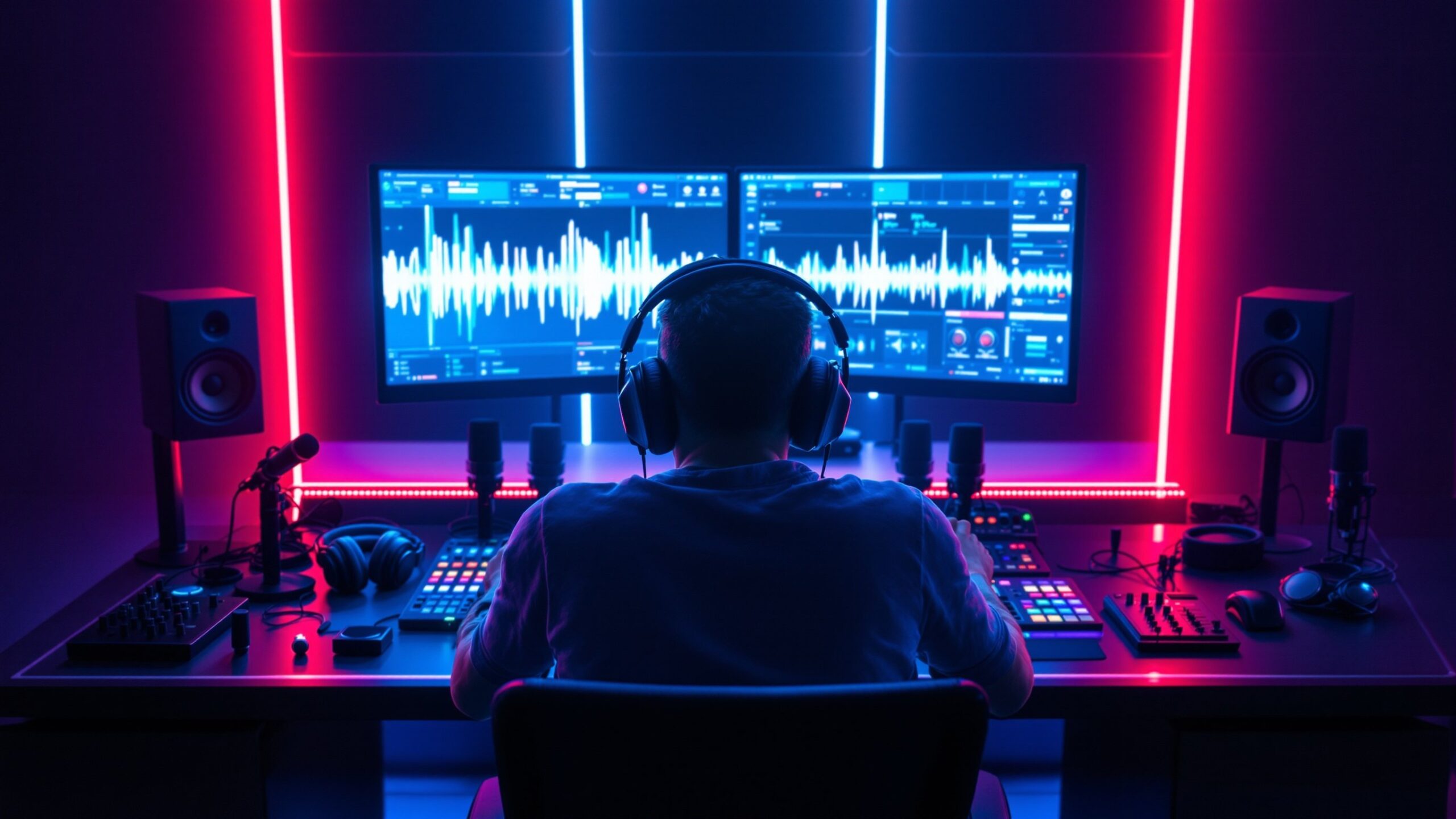
Artificial intelligence has transformed nearly every creative field, and music is no exception. In recent years, AI rap generators have evolved from simple lyric-spitting novelty tools into sophisticated creative systems capable of producing convincing rap verses, hooks, and entire songs. What once sounded robotic or awkward now often resembles the rhythm, rhyme complexity, and emotional intensity found in professional hip-hop recordings. Behind this transformation lies a powerful combination of machine learning, language modeling, music theory, and audio synthesis. AI rap generators are trained on enormous datasets of lyrics, beats, and vocal performances. By learning the patterns that define rap music—flow, rhyme structure, cadence, rhythm, and storytelling—these systems can generate verses that feel surprisingly human. Understanding how AI rap generators work reveals something fascinating: they don’t just randomly combine words. Instead, they carefully model the structures that make rap compelling. From internal rhyme patterns to syllable timing, AI analyzes and recreates the building blocks that artists have been mastering for decades.
A: They often have perfect rhyme but weak stress patterns—ask for varied stress and more natural phrasing.
A: Reduce syllable density, add breath points, and keep sentence structure simple per bar.
A: Yes—give it an anchor rhyme (e.g., “-ation”) and request 2–3 multis per 4 bars.
A: BPM, style (boom bap/trap/drill), and a syllable target per bar.
A: Ask for more slant rhymes, fewer perfect end rhymes, and stronger imagery over “setup” lines.
A: Provide 3–5 specific images or facts you want included; request “no tangents.”
A: Ask for simpler vocabulary, repeated key phrase, and open vowels; keep it 4–8 bars.
A: Keep the cadence, rewrite the nouns/verbs for originality, then adjust syllables to match the beat.
A: Specify a character, setting, and emotional stance; request signature phrases and a consistent point of view.
A: It’s safer to reference broad eras or subgenres and build your own voice—use influences without copying lines.
The Foundation: Training AI on Massive Lyric Databases
The core of any AI rap generator begins with training data. Modern AI systems learn by analyzing huge collections of hip-hop lyrics spanning decades of music. These datasets may include thousands of songs across subgenres such as boom bap, trap, drill, conscious rap, and melodic rap.
During training, AI models study patterns within the lyrics. They analyze rhyme placement, word frequency, syllable counts, sentence structures, slang usage, and storytelling techniques. The system learns which words commonly appear together and how rhymes are positioned within bars.
Over time, the AI begins to recognize deeper stylistic elements as well. It learns how punchlines are built, how metaphors are structured, and how rappers construct rhythm using multisyllabic rhymes. It also recognizes thematic patterns common in rap music, including personal struggle, social commentary, celebration, ambition, and storytelling.
This massive exposure allows the model to understand hip-hop as a linguistic style rather than simply memorizing lyrics. When it later generates new verses, it creates original combinations that follow the patterns it has learned.
Understanding Flow: The Rhythm of Words
Flow is one of the most important aspects of rap music. It refers to how lyrics rhythmically interact with the beat, including the timing, speed, and arrangement of syllables within each bar. AI rap generators learn flow by analyzing the rhythmic structure of lyrics aligned with instrumental beats. During training, models identify how many syllables typically appear in a measure and how those syllables are spaced across the rhythm of the track. For example, rap verses often follow a 4/4 time signature, meaning each bar contains four beats. AI systems study how artists distribute syllables across those beats, sometimes packing many syllables into a single beat and sometimes stretching a phrase across multiple beats. By understanding these rhythmic patterns, AI can generate lyrics that fit naturally into musical timing. The result is verses that feel like they were written with a beat in mind rather than random lines placed together.
Some advanced systems even allow users to specify tempo or beat style. The AI then adjusts the density of syllables and word pacing to match the rhythm of the instrumental.
Building Rhymes: From Simple End Rhymes to Complex Schemes
Rhyme structure is another critical element of rap music. Early hip-hop often relied on simple end rhymes, but modern rap frequently features intricate rhyme schemes with internal rhymes, multisyllabic rhymes, and multi-line rhyme chains.
AI rap generators excel at identifying these patterns. During training, they analyze phonetic relationships between words rather than relying solely on spelling. This allows the system to recognize rhymes based on sound.
For instance, AI can detect that “vision,” “decision,” and “precision” share similar phonetic endings. It can also identify multisyllabic rhymes such as “motivation” paired with “dedication.”
Advanced models track rhyme patterns across multiple bars. Instead of only rhyming the last word of each line, they may place internal rhymes within the middle of lines or continue a rhyme scheme across several bars.
This ability allows AI-generated lyrics to mimic the layered complexity found in professional rap writing. Some systems even intentionally introduce variations, mixing predictable rhymes with unexpected ones to create more natural and engaging verses.
Cadence: The Musical Personality of Rap Delivery
Cadence refers to the pattern of vocal emphasis, pauses, and rhythmic accents within a verse. It gives rap its musical personality and helps differentiate one artist’s style from another. While flow focuses on timing, cadence focuses on delivery. A rapper might emphasize certain syllables, pause between phrases, or stretch words across beats. These subtle variations make verses feel expressive and dynamic.
AI rap generators learn cadence by studying vocal recordings alongside lyrics. Speech synthesis models analyze pitch changes, timing shifts, and stress patterns in the voice. When generating lyrics and vocals, the AI can apply these patterns to create more natural delivery. The system may alter syllable length, emphasize certain words, or introduce pauses to mimic real rap performance.
This is one of the reasons modern AI rap vocals sound far more convincing than earlier attempts. Instead of reading lyrics in a monotone voice, AI systems now incorporate musical phrasing and expressive timing.
Natural Language Processing and Context Awareness
At the heart of AI rap generation is natural language processing (NLP). NLP enables AI models to understand language structure, grammar, context, and meaning. Modern rap generators use large language models trained on billions of words. These models learn how sentences are constructed and how ideas connect across paragraphs or verses.
When generating lyrics, the AI considers context from earlier lines to maintain thematic consistency. If the verse begins with a theme about ambition, the AI is more likely to continue referencing success, perseverance, or personal growth in later lines.
This contextual awareness helps avoid one of the biggest problems early lyric generators faced: randomness. Instead of unrelated sentences, modern AI can produce verses that feel cohesive and intentional. It can also incorporate storytelling techniques such as narrative progression, punchlines, and callbacks to earlier lines in the verse.
Beat Matching and Musical Timing
One of the most impressive features of modern AI rap generators is their ability to synchronize lyrics with beats. This involves aligning syllables with musical timing so that verses fit naturally within a track.
AI systems analyze beat patterns and tempo information. By understanding where drum hits occur within a measure, the AI can position syllables to match those rhythmic points.
For example, strong syllables may align with kick drums or snare hits, while weaker syllables fill spaces between beats. This technique mirrors how human rappers naturally perform over instrumentals.
Some AI tools allow users to upload their own beats. The system then analyzes the beat structure and generates lyrics specifically designed to match that rhythm.
This capability bridges the gap between text generation and music production, turning AI rap generators into full creative collaborators.
Voice Synthesis and AI Rap Vocals
Lyrics alone are only part of the equation. Many AI rap generators now include voice synthesis technology that converts text into realistic rap vocals. These systems use neural text-to-speech models trained on vocal recordings. By studying thousands of spoken or sung phrases, the AI learns how to reproduce human speech patterns. For rap vocals, the models must capture several unique elements including rhythmic timing, vocal tone, pitch variation, and breath placement. They also need to maintain the energy and attitude that define hip-hop performance. Modern voice models can simulate a wide range of rap styles. Some systems even allow users to adjust vocal characteristics such as intensity, tempo, or vocal tone. While still evolving, AI rap vocals have become impressively convincing, especially when layered with professional mixing and effects.
Style Emulation and Genre Awareness
Hip-hop is not a single style of music. It encompasses a wide range of subgenres, each with distinct lyrical patterns and rhythmic approaches. AI rap generators learn these stylistic differences during training. By analyzing songs from different eras and regions, the system recognizes how flows vary across styles.
For example, trap music often features rapid hi-hat patterns and rhythmic repetition, which encourages faster syllable placement. Boom bap beats, on the other hand, typically support more deliberate lyric delivery.
AI models can adjust lyric structure and cadence based on the selected genre or beat type. This flexibility allows users to experiment with different rap styles while maintaining authenticity. Some tools even allow users to specify stylistic influences, encouraging the AI to adopt particular lyrical themes or rhythmic approaches.
Creativity Through Controlled Randomness
One of the challenges in AI-generated music is balancing structure with creativity. If an AI strictly follows patterns, the output can feel predictable. If it becomes too random, the lyrics lose coherence.
Modern AI rap generators solve this problem using controlled randomness. During generation, the model assigns probabilities to possible word choices based on learned patterns.
Instead of always selecting the most predictable word, the AI occasionally chooses less common options. This introduces variety while still maintaining grammatical and stylistic accuracy.
The result is lyrics that feel fresh and spontaneous rather than formulaic. Each generated verse can contain unique phrases, creative metaphors, and unexpected rhyme combinations.
This blend of structure and exploration mirrors the creative process of human writers.
Collaboration Between Artists and AI
Rather than replacing human creativity, AI rap generators are increasingly being used as collaborative tools. Many artists use AI to brainstorm lyric ideas, experiment with rhyme schemes, or overcome writer’s block. A rapper might input a theme, phrase, or concept and allow the AI to generate multiple variations. These suggestions can inspire new directions for the song or spark creative ideas that might not have emerged otherwise. Producers and songwriters are also using AI to test flows over beats before recording final vocals. By generating placeholder verses, they can quickly experiment with structure and timing. This collaborative approach highlights one of the most exciting aspects of AI in music: it expands the creative toolkit available to artists.
Ethical Questions and the Future of AI Rap
As AI rap generators grow more advanced, they also raise important ethical questions. One major concern involves voice cloning technology, which can replicate the vocal style of specific artists.
While this technology has exciting creative potential, it also raises issues related to copyright, identity, and artistic ownership. Many developers are now working to create ethical guidelines and permission-based systems for voice modeling.
Another question involves originality. Because AI models learn from existing music, debates continue about how much influence training data should have on generated content.
Despite these concerns, the technology continues to evolve rapidly. Developers are focusing on transparency, artist collaboration, and responsible innovation to ensure that AI supports rather than undermines creative communities.
The Future of AI in Hip-Hop Creativity
AI rap generators represent a fascinating intersection of technology and artistry. By combining machine learning, linguistic analysis, and audio synthesis, these systems can recreate the essential ingredients of rap music: flow, rhyme, and cadence. As the technology improves, AI tools will likely become even more integrated into music production. We may see real-time lyric generation during live performances, AI-assisted songwriting platforms, and collaborative music systems where artists and algorithms compose together. What remains clear is that hip-hop’s spirit of innovation aligns naturally with emerging technology. The genre has always embraced new tools, from turntables and samplers to digital production software. AI rap generators are simply the next chapter in that evolution—opening new possibilities for creativity while continuing the tradition of pushing musical boundaries.

