Hip-hop has always been a genre defined by innovation. From turntables and samplers to digital audio workstations and online distribution platforms, technology has consistently reshaped how artists create and share music. In recent years, one of the most fascinating developments has been the rise of artificial intelligence in music production—particularly AI rap flow generators designed to replicate the natural cadence, rhythm, and emotion of human rappers. Early attempts at AI-generated rap often sounded mechanical and predictable. The lyrics lacked personality, the rhythm felt stiff, and the overall performance felt disconnected from the expressive traditions of hip-hop. But the latest generation of AI rap flow generators is dramatically different. Today’s tools can analyze rhythm patterns, rhyme structures, breath timing, and vocal inflection to create flows that sound remarkably human. For artists, producers, and hobbyists alike, these systems offer something revolutionary: the ability to experiment with rap delivery styles, generate creative inspiration, and explore new sonic ideas faster than ever before. What once required hours of writing, rehearsing, and recording can now be prototyped in seconds—without sacrificing authenticity.
A: Because timing and stress are too uniform—humans vary accents, pauses, and phrase lengths.
A: Add breath points, 1–2 intentional pauses, and a few ad-lib callouts—then reduce syllable density slightly.
A: Not always—mix end rhymes with internal/slant rhymes for a more natural, modern sound.
A: Usually 1–3. Too many switches reads like a demo reel, not a real verse.
A: Cut 10–20% of syllables, lengthen stressed vowels, and leave space before punchlines.
A: Prompt for varied syntax (fragments, questions, commands) and require different line lengths every few bars.
A: A repeatable motif, clear rhythm, and slight variation on the repeat—like a performer playing with the pocket.
A: Use simple cues: “ride behind the beat,” “snap to the snare,” “double-time for 2 bars,” “pause before the punch.”
A: Yes, but it works best when you give it a vowel family and 3–5 anchor words to build around.
A: Read it out loud at tempo—if you stumble, simplify phrasing until it can be performed cleanly.
What Makes a Rap Flow Sound Human?
To understand how AI rap flow generators work, it helps to first understand what makes a rap flow feel natural in the first place. Rap delivery is more than just rhyming words over a beat. It involves subtle musical and linguistic elements that shape how listeners perceive rhythm and emotion.
A convincing rap flow combines several key elements. Rhythm is the most obvious component, but rhythm alone isn’t enough. Human rappers constantly adjust timing, sometimes hitting beats precisely and other times sliding slightly ahead or behind the rhythm to create groove and tension.
Cadence also plays a crucial role. This refers to the pattern of stressed and unstressed syllables within a verse. Skilled rappers vary cadence throughout a song to keep listeners engaged. Some sections may use rapid-fire syllables packed into tight rhythmic spaces, while others slow down to emphasize important lines.
Breath patterns further contribute to authenticity. Humans naturally pause between phrases, inhale at logical points, and adjust delivery depending on vocal intensity. AI systems that ignore breathing tend to sound robotic because their phrasing never reflects the natural limits of a human voice.
Emotion and tone also matter. Rap is expressive storytelling. The pitch, emphasis, and vocal energy in each line communicate attitude and meaning. AI that can analyze emotional context and adjust delivery accordingly produces far more convincing performances.
Modern AI rap flow generators attempt to replicate all of these elements simultaneously.
How AI Rap Flow Generators Actually Work
Behind the scenes, AI rap flow generators rely on sophisticated machine learning models trained on massive collections of music and spoken language data. These systems analyze thousands—or even millions—of rap verses to learn patterns that define different styles.
The process begins with natural language models that understand how lyrics are structured. These models study rhyme schemes, internal rhymes, syllable counts, and word placement. By learning how rappers construct verses, the AI can generate lyrics that maintain rhythm and coherence.
Next comes rhythmic modeling. AI analyzes the relationship between syllables and beats in a musical track. It learns where syllables tend to fall within a bar and how rappers vary their timing across different tempos and genres.
Audio synthesis systems then take the generated lyrics and convert them into vocal performances. Advanced voice models can adjust pitch, speed, and articulation to mimic realistic delivery. Some AI tools even simulate breath timing and vocal emphasis, allowing lines to rise and fall dynamically instead of sounding flat. The result is a layered system that blends language modeling, rhythmic analysis, and audio synthesis to create rap flows that resemble real human performances.
The Evolution from Robotic to Realistic
The earliest AI-generated rap systems struggled with realism. Their biggest limitation was rigidity. They tended to place syllables perfectly on beat every time, which made the delivery feel mechanical. Human rappers rarely perform this way. Even the most technically precise artists incorporate microtiming variations that give their flow character. These tiny timing shifts—often just milliseconds—create swing and groove.
Modern AI models address this issue by introducing controlled randomness and timing flexibility. Instead of rigidly quantizing every syllable, the system allows subtle variations that mirror human performance.
Another improvement involves contextual awareness. Earlier models generated lyrics and rhythm independently. Newer systems analyze lyrics and beat structure simultaneously, allowing them to place emphasis on important words and align rhymes with musical accents.
Voice synthesis technology has also improved dramatically. AI voices now capture nuances like vocal fry, pitch modulation, and subtle changes in intensity that make performances sound more organic. Together, these advancements transform AI rap from a novelty into a legitimate creative tool.
Training AI to Understand Hip-Hop Style
One of the most impressive aspects of modern rap flow generators is their ability to recognize stylistic differences between artists and subgenres. Hip-hop is incredibly diverse. The rhythmic patterns used in boom-bap differ from those found in trap, drill, or experimental underground rap. AI systems trained on broad datasets can learn these stylistic distinctions. For example, trap flows often feature rapid triplet rhythms and shorter phrases. Boom-bap flows typically emphasize strong downbeats and longer lyrical lines. Drill music tends to use darker tones and syncopated patterns. AI models trained on these styles can generate flows that match specific genres. Some systems even allow users to choose stylistic parameters, adjusting tempo, rhyme density, and delivery intensity. This ability to mimic stylistic diversity is one reason modern AI rap tools feel far more human than their predecessors.
AI as a Creative Partner, Not a Replacement
Despite their impressive capabilities, AI rap flow generators are best viewed as creative collaborators rather than replacements for human artists.
Great hip-hop is deeply personal. It reflects lived experiences, cultural identity, and emotional storytelling. AI cannot replicate the authenticity that comes from real human perspectives.
Instead, AI excels at accelerating creative experimentation. Writers can use rap flow generators to test different rhyme patterns, explore alternative cadences, or overcome writer’s block.
Producers may use AI-generated flows to prototype vocal arrangements before working with human artists. Songwriters can generate multiple variations of a verse and refine them into a final composition.
In many ways, AI functions like a musical sketchpad—helping creators explore ideas quickly without replacing their artistic voice.
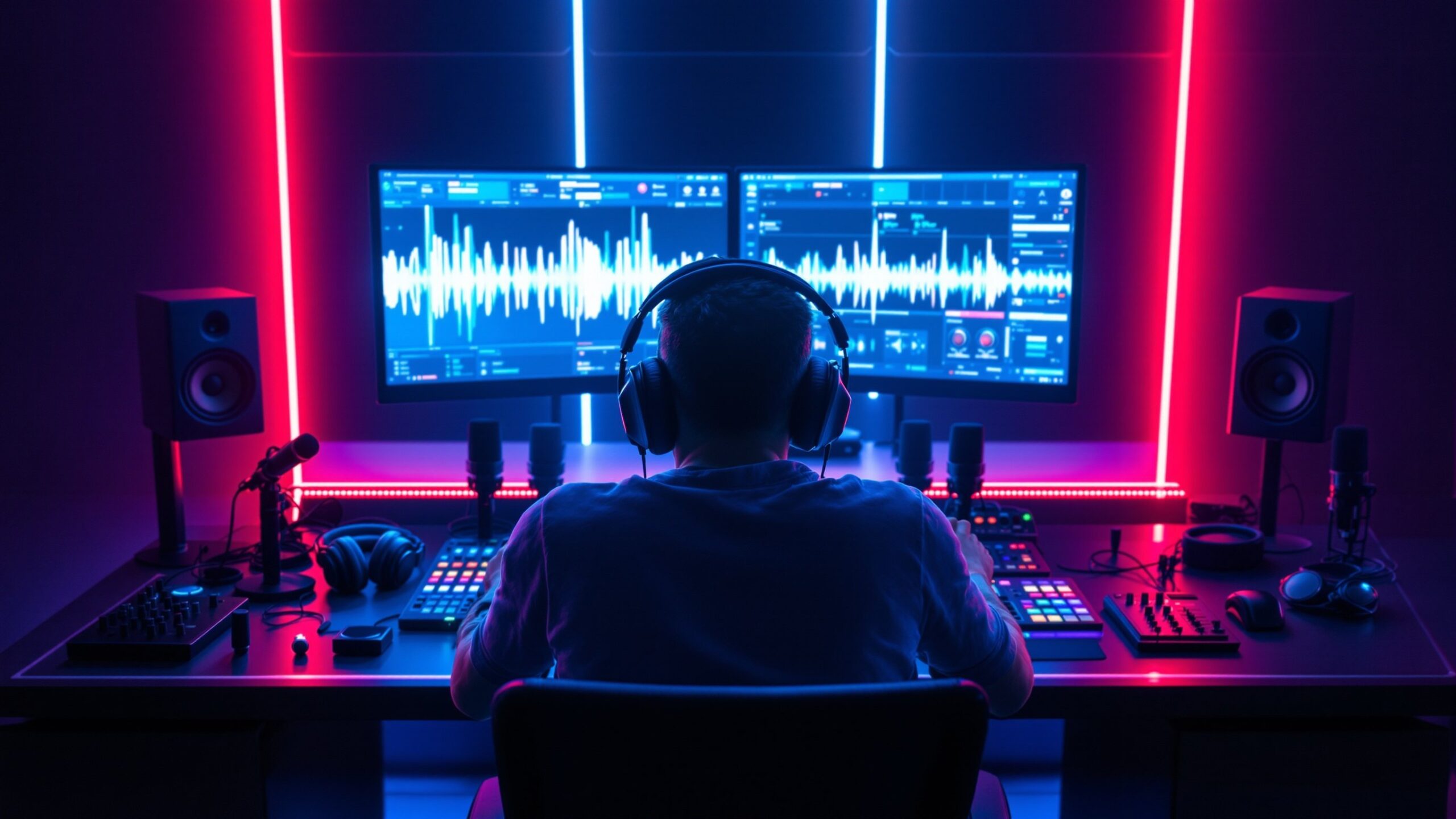
How Producers Use AI Rap Flow Tools in the Studio
In professional music production environments, speed and experimentation are crucial. AI rap flow generators provide producers with new ways to explore musical ideas during early stages of development. A producer might begin by loading a beat into an AI tool and generating several different rap flows to see which rhythmic structure fits the track best. This process can reveal unexpected phrasing patterns that inspire new directions for the song. Songwriters can also experiment with rhyme density. Some flows may emphasize intricate internal rhymes, while others rely on simpler, more melodic delivery. By hearing these variations instantly, creators can make more informed decisions about how to shape their music. Another common use case involves demo vocals. Instead of waiting for a recording session, producers can generate temporary rap performances that help artists visualize how a track might sound once lyrics are finalized. These workflows illustrate how AI enhances creativity rather than replacing human talent.
The Role of Natural Language Processing in Rap Generation
Natural language processing plays a central role in making AI rap flows sound authentic. Rap lyrics rely heavily on linguistic techniques that go beyond basic rhyming.
Internal rhyme structures are particularly important. Skilled rappers often place rhymes within lines rather than only at the end. AI models trained on large lyric datasets learn how these internal rhymes create rhythmic momentum.
Wordplay and phonetic similarity also matter. Many rap verses rely on slant rhymes—words that sound similar but do not match perfectly. AI systems analyze phonetic patterns to reproduce this effect.
Contextual meaning is another factor. Lyrics must remain coherent and emotionally resonant rather than random strings of rhyming words. Advanced language models maintain narrative flow while preserving rhythmic structure.
These linguistic capabilities are what allow AI-generated rap to feel intentional rather than algorithmic.
Voice Synthesis and the Human Factor
Even with perfect lyrics and rhythm, a rap performance still needs a convincing voice. Voice synthesis technology has undergone remarkable advancements in recent years. Modern AI voice systems are trained using deep neural networks that analyze vocal recordings at an extremely detailed level. They learn how human voices shape vowels, consonants, and transitions between sounds. This training enables the AI to reproduce subtle characteristics such as breathiness, tonal shifts, and emotional emphasis. When combined with rhythmic modeling, these features create performances that feel far more lifelike. Some systems also allow users to adjust vocal characteristics. Artists can experiment with deeper tones, aggressive delivery styles, or melodic rap techniques. These customizable voices further enhance the illusion of human performance.
Ethical Considerations in AI Rap Technology
As AI-generated rap becomes more realistic, ethical considerations become increasingly important. One major concern involves voice imitation. If an AI model is trained to mimic a specific artist’s voice, questions arise about consent and intellectual property.
The music industry is still developing guidelines to address these issues. Many platforms now restrict the use of AI systems that replicate recognizable voices without permission.
Another ethical consideration involves originality. If AI is trained on thousands of existing songs, some critics worry about whether generated content truly represents new creative work.
Responsible AI developers attempt to mitigate these concerns by focusing on style learning rather than direct imitation. Their goal is to capture general patterns without reproducing specific artists’ material. As regulations evolve, the music industry will continue shaping how AI tools are used responsibly.
The Future of AI Rap Flow Generation
The rapid pace of AI innovation suggests that rap flow generators will become even more sophisticated in the coming years. Future systems may incorporate real-time beat analysis, allowing AI to adapt its flow dynamically as music changes. Emotion-aware models could also emerge. By analyzing lyrical themes and musical mood, AI might adjust vocal tone to match emotional intensity within a song. Another promising development involves interactive AI collaboration. Instead of generating entire verses automatically, future systems may allow artists to guide the process line by line, adjusting rhythm, emphasis, and rhyme complexity in real time. These advancements will likely make AI an even more powerful creative companion for musicians.
Why AI Rap Tools Are Reshaping Music Creation
Ultimately, AI rap flow generators represent a broader shift in how music is created. Technology is no longer just a recording tool—it is becoming an active collaborator in the creative process.
By combining linguistic intelligence, rhythmic analysis, and advanced voice synthesis, these systems can produce rap flows that feel remarkably human. What once sounded robotic now carries groove, emotion, and stylistic nuance.
For emerging artists, this technology lowers barriers to experimentation. For professional producers, it accelerates workflow and inspires new creative possibilities.
Most importantly, AI does not diminish the artistry of hip-hop. Instead, it expands the palette of tools available to musicians who continue to push the boundaries of sound and storytelling. The future of rap will still belong to human creativity—but increasingly, that creativity will be amplified by intelligent machines capable of understanding rhythm, language, and musical expression.