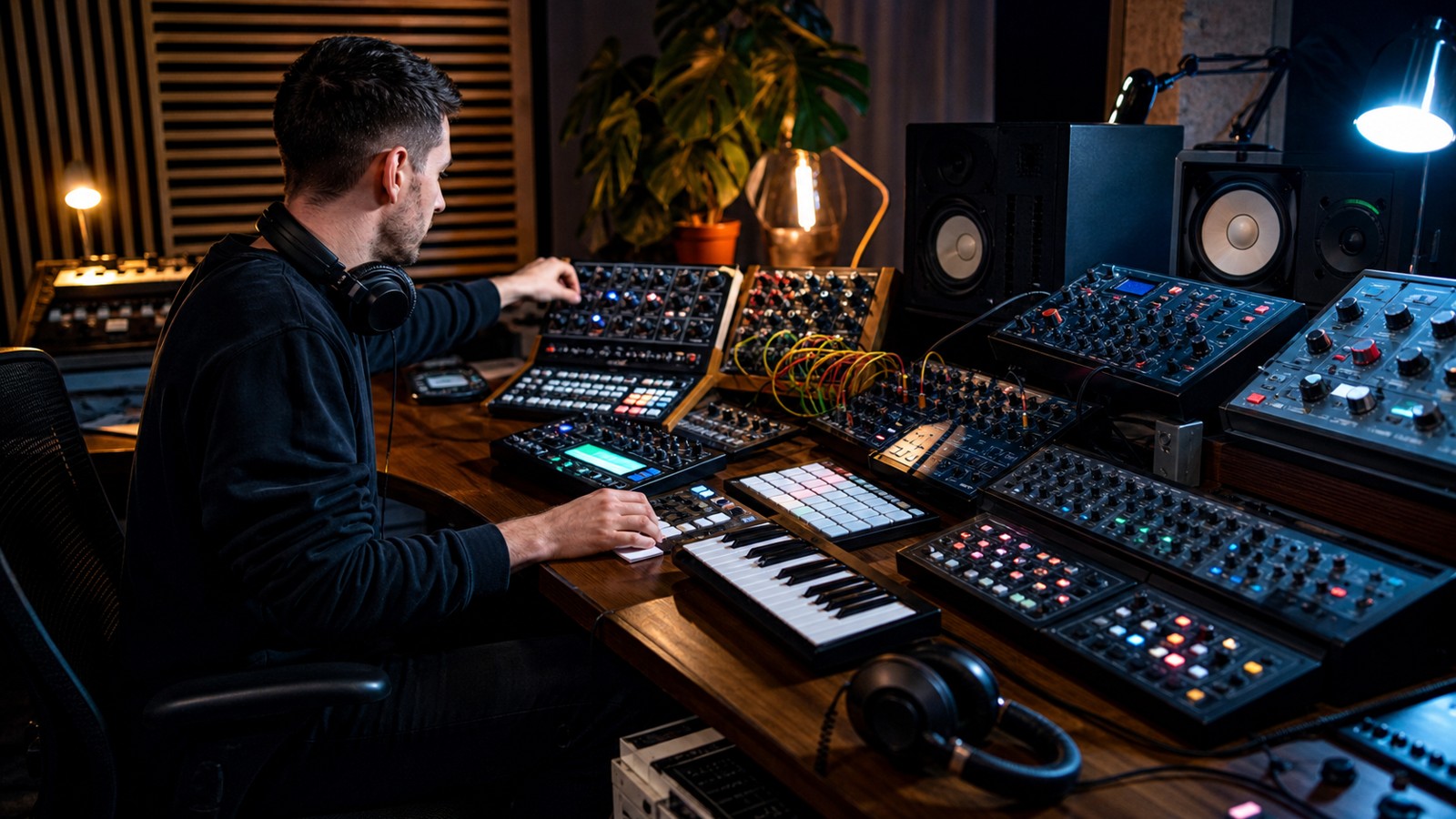
AI music sounds like one story from a distance, but up close it divides into many different problems. In this case, the center is choosing EDM tools by workflow rather than brand noise. The tools may touch DAWs, stem tools, sample finders, mastering assistants, MIDI generators, yet the real stakes sit with bedroom producers, DJs, remixers, and release-focused artists, who have to decide what should be automated, what should be credited, and what still needs a human hand on the final choice.
Choose by the Part You Cannot Finish
Choose by the Part You Cannot Finish matters because choosing EDM tools by workflow rather than brand noise depends on more than technical output. The surface can be generated quickly, but the meaning comes from how bedroom producers, DJs, remixers, and release-focused artists choose, cut, repeat, perform, or reject what appears. When AI touches DAWs, stem tools, sample finders, mastering assistants, MIDI generators, it can speed up the search for options while also making weak ideas look more finished than they really are. In practice, choose by the part you cannot finish is where the work becomes concrete. A tool may produce something convincing on first playback, but bedroom producers, DJs, remixers, and release-focused artists still have to ask whether it survives the room, the body, the listener, and the larger tradition around it. The answer often appears in small details: timing, restraint, tone, credit, or the decision to leave something imperfect.
Beat and Groove Generators
A better workflow is slower at the point of judgment. Generate quickly if that helps, but listen again away from the tool. Ask what the section is doing, whose knowledge it depends on, and whether the final result could only belong to this project. That is how choosing EDM tools by workflow rather than brand noise keeps its shape while still benefiting from new technology.
Beat and Groove Generators matters because choosing EDM tools by workflow rather than brand noise depends on more than technical output. The surface can be generated quickly, but the meaning comes from how bedroom producers, DJs, remixers, and release-focused artists choose, cut, repeat, perform, or reject what appears. When AI touches DAWs, stem tools, sample finders, mastering assistants, MIDI generators, it can speed up the search for options while also making weak ideas look more finished than they really are.
In practice, beat and groove generators is where the work becomes concrete. A tool may produce something convincing on first playback, but bedroom producers, DJs, remixers, and release-focused artists still have to ask whether it survives the room, the body, the listener, and the larger tradition around it. The answer often appears in small details: timing, restraint, tone, credit, or the decision to leave something imperfect.
Melody and Chord Helpers
The danger is not that every machine-made result is useless. The danger is that DAWs, stem tools, sample finders, mastering assistants, MIDI generators can become interchangeable when the same shortcuts are accepted without pressure. Good use of AI starts when bedroom producers, DJs, remixers, and release-focused artists treat the output as material to argue with, not as a finished verdict.
Sound Design Assistants
The danger is not that every machine-made result is useless. The danger is that DAWs, stem tools, sample finders, mastering assistants, MIDI generators can become interchangeable when the same shortcuts are accepted without pressure. Good use of AI starts when bedroom producers, DJs, remixers, and release-focused artists treat the output as material to argue with, not as a finished verdict.
A better workflow is slower at the point of judgment. Generate quickly if that helps, but listen again away from the tool. Ask what the section is doing, whose knowledge it depends on, and whether the final result could only belong to this project. That is how choosing EDM tools by workflow rather than brand noise keeps its shape while still benefiting from new technology.
Stem and Remix Tools
Stem and Remix Tools matters because choosing EDM tools by workflow rather than brand noise depends on more than technical output. The surface can be generated quickly, but the meaning comes from how bedroom producers, DJs, remixers, and release-focused artists choose, cut, repeat, perform, or reject what appears. When AI touches DAWs, stem tools, sample finders, mastering assistants, MIDI generators, it can speed up the search for options while also making weak ideas look more finished than they really are.
In practice, stem and remix tools is where the work becomes concrete. A tool may produce something convincing on first playback, but bedroom producers, DJs, remixers, and release-focused artists still have to ask whether it survives the room, the body, the listener, and the larger tradition around it. The answer often appears in small details: timing, restraint, tone, credit, or the decision to leave something imperfect.
The danger is not that every machine-made result is useless. The danger is that DAWs, stem tools, sample finders, mastering assistants, MIDI generators can become interchangeable when the same shortcuts are accepted without pressure. Good use of AI starts when bedroom producers, DJs, remixers, and release-focused artists treat the output as material to argue with, not as a finished verdict.
Mastering and Loudness Checks
The danger is not that every machine-made result is useless. The danger is that DAWs, stem tools, sample finders, mastering assistants, MIDI generators can become interchangeable when the same shortcuts are accepted without pressure. Good use of AI starts when bedroom producers, DJs, remixers, and release-focused artists treat the output as material to argue with, not as a finished verdict.
Licensing Questions Before Release
Licensing Questions Before Release matters because choosing EDM tools by workflow rather than brand noise depends on more than technical output. The surface can be generated quickly, but the meaning comes from how bedroom producers, DJs, remixers, and release-focused artists choose, cut, repeat, perform, or reject what appears. When AI touches DAWs, stem tools, sample finders, mastering assistants, MIDI generators, it can speed up the search for options while also making weak ideas look more finished than they really are.
In practice, licensing questions before release is where the work becomes concrete. A tool may produce something convincing on first playback, but bedroom producers, DJs, remixers, and release-focused artists still have to ask whether it survives the room, the body, the listener, and the larger tradition around it. The answer often appears in small details: timing, restraint, tone, credit, or the decision to leave something imperfect.
A Practical 2026 Tool Stack
The danger is not that every machine-made result is useless. The danger is that DAWs, stem tools, sample finders, mastering assistants, MIDI generators can become interchangeable when the same shortcuts are accepted without pressure. Good use of AI starts when bedroom producers, DJs, remixers, and release-focused artists treat the output as material to argue with, not as a finished verdict.
A better workflow is slower at the point of judgment. Generate quickly if that helps, but listen again away from the tool. Ask what the section is doing, whose knowledge it depends on, and whether the final result could only belong to this project.
That is how choosing EDM tools by workflow rather than brand noise keeps its shape while still benefiting from new technology.
What to Listen For
Listeners should pay attention to whether the work carries a point of view after the novelty fades. In choosing EDM tools by workflow rather than brand noise, the most revealing moments are often not the loudest or cleanest ones. They are the moments where a human decision can be heard: a pause, a rough edge, a credited source, a playable phrase, or a refusal to make the obvious move.
If the music only proves that DAWs, stem tools, sample finders, mastering assistants, MIDI generators can be imitated, it will age quickly. If it uses AI to clarify a stronger idea, it has a better chance of feeling durable.
Why This Angle Changes the Outcome 10
The same AI feature can be helpful or harmful depending on the goal. For bedroom producers, DJs, remixers, and release-focused artists, a fast draft is useful when it opens choices, but it becomes a problem when it hides authorship or turns DAWs, stem tools, sample finders, mastering assistants, MIDI generators into a generic surface. That distinction is why this topic needs its own treatment rather than the same broad AI-music explanation. Good creative practice leaves a trail of decisions. It should be possible to explain what was generated, what was changed, what was rejected, and why the finished piece deserves to exist in this form.
Why This Angle Changes the Outcome 11
The same AI feature can be helpful or harmful depending on the goal. For bedroom producers, DJs, remixers, and release-focused artists, a fast draft is useful when it opens choices, but it becomes a problem when it hides authorship or turns DAWs, stem tools, sample finders, mastering assistants, MIDI generators into a generic surface. That distinction is why this topic needs its own treatment rather than the same broad AI-music explanation.
Good creative practice leaves a trail of decisions. It should be possible to explain what was generated, what was changed, what was rejected, and why the finished piece deserves to exist in this form.
Why This Angle Changes the Outcome 12
The same AI feature can be helpful or harmful depending on the goal. For bedroom producers, DJs, remixers, and release-focused artists, a fast draft is useful when it opens choices, but it becomes a problem when it hides authorship or turns DAWs, stem tools, sample finders, mastering assistants, MIDI generators into a generic surface. That distinction is why this topic needs its own treatment rather than the same broad AI-music explanation. Good creative practice leaves a trail of decisions. It should be possible to explain what was generated, what was changed, what was rejected, and why the finished piece deserves to exist in this form.
Why This Angle Changes the Outcome 13
The same AI feature can be helpful or harmful depending on the goal. For bedroom producers, DJs, remixers, and release-focused artists, a fast draft is useful when it opens choices, but it becomes a problem when it hides authorship or turns DAWs, stem tools, sample finders, mastering assistants, MIDI generators into a generic surface. That distinction is why this topic needs its own treatment rather than the same broad AI-music explanation.
Good creative practice leaves a trail of decisions. It should be possible to explain what was generated, what was changed, what was rejected, and why the finished piece deserves to exist in this form.
Why This Angle Changes the Outcome 14
The same AI feature can be helpful or harmful depending on the goal. For bedroom producers, DJs, remixers, and release-focused artists, a fast draft is useful when it opens choices, but it becomes a problem when it hides authorship or turns DAWs, stem tools, sample finders, mastering assistants, MIDI generators into a generic surface. That distinction is why this topic needs its own treatment rather than the same broad AI-music explanation. Good creative practice leaves a trail of decisions. It should be possible to explain what was generated, what was changed, what was rejected, and why the finished piece deserves to exist in this form.
Final Takeaway
The future here is not a simple replacement story. AI will remove friction from parts of the process, and some low-context work will become easier to automate. But bedroom producers, DJs, remixers, and release-focused artists still define the values around the music. The best results will come from creators who use faster tools without surrendering the slower responsibilities of taste, consent, and meaning.