A concert can contain several kinds of performance at once
A figure on a stage appears to sing, a band plays beneath a huge visual scene, and the crowd reacts together in the room. Which part of that experience is live? The answer may involve several layers rather than one simple label. A digital figure can accompany human musicians, an AI-created sound can be prepared weeks in advance, and an ordinary video can change in response to a live operator without generating anything new. These distinctions matter because they describe the performance a fan is choosing to attend and the work that artists and crews are doing. This guide explains the main components behind events described as AI concerts, including source performances, playback, synthesis, generation, control, and audience interaction. You do not need to know every technical detail before enjoying a show. You should, however, be able to understand who is performing now, what was prepared earlier, and what the production is actually claiming.
Start with the sound, the image, and the control
Separate a concert into three layers before interpreting its technology. The sound is what you hear, the image is what you see, and the control determines how those elements unfold. Each layer can involve people working in the room, material prepared earlier, automated sequences, or systems that respond during the event. Their combination is more informative than the single label AI.
ABBA Voyage makes the layers easier to picture. Its documented production combines a live band with digital avatars created using motion capture and visual effects. The following map keeps the current performance, prepared image, and coordinated presentation distinct. Those components explain more than an umbrella description such as an AI concert.
| Layer | Documented ABBA example | What the distinction tells a fan |
|---|---|---|
| Sound and present performance | A ten-piece live band performs alongside the avatars. | Human musicians contribute during the event. |
| Image | Digital avatars were developed with motion capture and visual effects. | A lifelike figure is part of a prepared visual production. |
| Coordinated show | Live performers and prepared visuals share the concert presentation. | The event contains several production layers rather than one uniform method. |
The layers also explain why appearances can mislead. A realistic face does not establish that the voice is being generated, and an abstract visual does not establish that a computer is improvising. What matters is the production process and the relationship between its parts. Promoters can make that relationship understandable without disclosing proprietary technical details.
Live musicians perform in the present
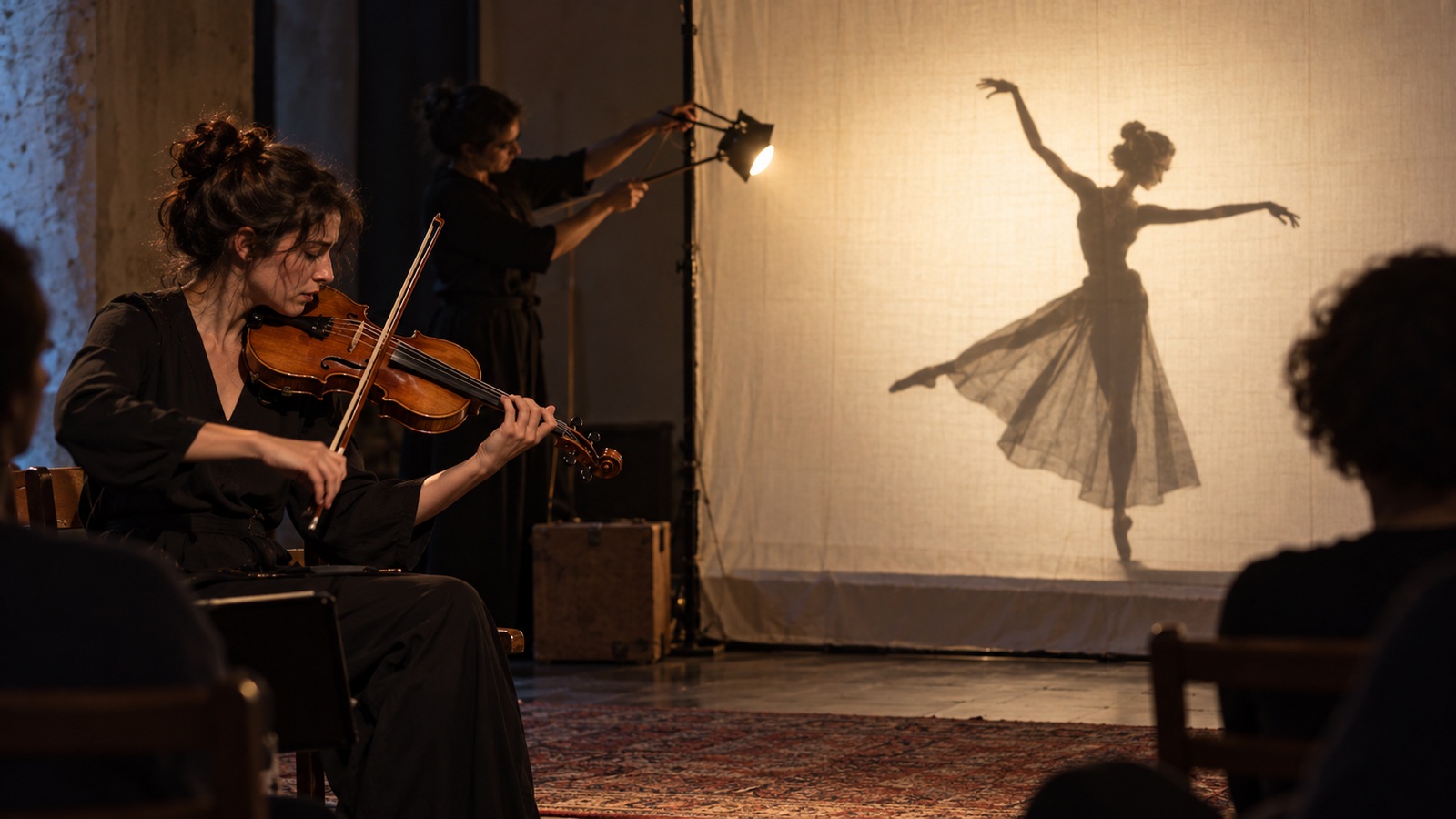
A human playing or singing during the event contributes a current performance, even when other parts of the show are prepared. Their timing, phrasing, response to the room, and interaction with other performers can create variation. Technology may amplify, process, or support that performance. Its presence does not automatically make the musician’s contribution less live.
At the same time, seeing a person with an instrument does not tell you how every audible part is produced. Contemporary shows can combine live playing with recorded layers and synchronized material. A useful description explains the important components rather than implying either that everything is spontaneous or that everything is playback. The audience can then assess the experience on the terms being offered.
Consider the role of rehearsed structure. A setlist, arrangement, and cue sequence can be carefully planned while the performance remains live. Preparation and liveness are not opposites. The distinction concerns what people or systems are doing at the event, including where they can respond and where the production must follow a fixed timeline.
Give supporting performers appropriate visibility in the explanation. A digital lead figure may attract the advertising, but musicians, dancers, operators, and other contributors can be central to what the audience experiences. Clear credits help fans understand the work behind the spectacle. They also prevent an expansive claim about AI from obscuring substantial human performance.
Prepared audio can have many different origins
Playback means audio was prepared before the moment in which the audience hears it. That audio might come from a human recording, a synthesizer, edited stems, generated material, or a mixture of sources. The fact that it plays from a file does not identify its origin. Conversely, AI involvement during creation does not prove the file is changing during the show.
A production may deliberately use prepared material for consistency or for parts that are not being performed in the room. That is a creative and practical choice requiring an honest description where it affects the event’s central promise. It is different from claiming a system composes in response to the audience. Fans should be able to distinguish those claims before evaluating the experience.
Generation is different from ordinary synthesis
A synthesizer produces sound through a designed sound-making process, and musicians have used electronic instruments for decades. Generative AI may produce outputs using learned patterns and a particular input or instruction. These descriptions concern different aspects of the process and can overlap in a wider production. Calling any electronic sound AI would erase distinctions that help explain what is happening.
Also distinguish generating an asset from generating during the performance. A team could create and approve material in advance, then deliver it as ordinary playback. A responsive system could instead produce or alter content while the event unfolds. The latter introduces additional needs around timing, boundaries, supervision, and recovery when outputs are unsuitable.
Ask what the advertised system actually changes. Does it create new musical material, select among prepared options, modify an effect, or trigger a known cue? The difference may be artistically meaningful even when all four approaches can look interactive. A clear answer is more useful than a general promise that every show will be unique.
Digital performers do not describe a single technology
A digital performer might be a fictional animated character, a representation of a living artist, or a portrayal of someone whose source performances were recorded earlier. Its motion can be prepared, controlled by people, or driven by other inputs. The voice may have a separate origin from the visible movement. Treating the figure as one indivisible technical object makes those contributions harder to understand.
ABBA Voyage is a helpful documented example. Its official live-band page states that a ten-piece band performs throughout the concert alongside digital avatars. That tells you something concrete about the current human performance. It does not require a guess based on how lifelike the figures appear.
The show’s official description also identifies motion capture and visual effects created with the band. This is a reason to describe the actual production components rather than relabel every avatar show as live AI generation. Different digital events can make very different artistic promises. Judge each by its own clear account of the performance.
Permission is another separate layer. A convincing representation does not itself demonstrate that an artist or other relevant rights holder approved a use. For organizers, the actual agreements may need to cover voice, likeness, recordings, compositions, and promotion. Significant projects deserve qualified legal review in the relevant jurisdictions. Audience-facing claims should remain within what the production can substantiate.
Responsiveness can come from people or programmed rules
A visual that follows a beat may be reacting through a conventional audio-analysis rule rather than a generative model. An operator can also improvise with prepared visual material, selecting and shaping it in real time. Those approaches can create a responsive experience without a system inventing new content. The artistic result and technical method should not be confused.
Production systems illustrate the range of control involved. Disguise’s documentation describes a stage visualizer, media playback, and a timeline. These components help coordinate a complex show but do not by themselves establish an AI performance. Ask what sits inside the specific workflow instead of inferring it from a product’s presence.
Audience interaction needs an understandable mechanism
When a production says the audience shapes the event, identify the route by which that happens. A vote could choose a prepared song, a performer could respond to crowd energy, or a system could use an explicit contribution as input. These mechanisms give the audience different degrees and kinds of influence. A small change does not necessarily mean the entire show is being composed collectively.
Look for a clear explanation of participation and data use. If a camera, microphone, app, or submitted recording is involved, people should understand what they are contributing and how it will be used. An event can preserve some creative surprise while explaining those basic conditions. Organizers should obtain appropriate advice for the actual collection and processing involved.
Provide a way to enjoy the event without unnecessary participation barriers. A person may not want an account, may not have a suitable phone, or may prefer not to appear in visual material. Design those choices before tickets are sold. A shared performance becomes less welcoming when an optional novelty turns into an unexpected requirement.
Understand what a failure would interrupt
The way a show recovers can reveal how its components relate. If a prepared visual stops while the musicians continue comfortably, the image may be a separate supporting layer. If the music must follow a fixed sequence, recovery may require a coordinated restart. Neither example is a general verdict on quality; each describes a different production dependency.
Organizers need to rehearse those dependencies rather than discovering them in front of an audience. Identify which systems must stay synchronized and who can call a change. A generative component also needs boundaries for unsuitable output, while ordinary playback needs dependable versions and delivery. The practical work differs, even when the audience sees one continuous performance.
Fans do not need a technical failure plan in the event description. They do benefit from a truthful account of the central format and any conditions that materially affect participation. Artists and crews need the more detailed internal explanation. Giving each group the information relevant to its role supports both artistic mystery and operational clarity.
Consider how the artist experiences that dependency too. A performer who can hear and respond to other musicians has a different set of freedoms from someone whose movement must align with a fixed visual sequence. Both situations can involve demanding skill. Understanding the constraint can deepen appreciation for the work instead of reducing the event to a contest over which component seems most spontaneous.
These distinctions are also useful when discussing a show afterward. You can describe the moment that moved you while being careful about the mechanism you did not observe. Say that an image seemed responsive if that is all the evidence establishes. Reserve a stronger claim about generation or autonomy for a production explanation that actually supports it.
Evaluate the event’s promise before evaluating its novelty
Read the event description for concrete statements about performers and format. Look for whether named artists will be physically present, which contributors perform live, and whether the experience relies on prepared representation. If an essential point remains unclear, seek an answer from the official organizer. Avoid assuming a familiar name in the title means the same performance format as a conventional tour.
Reviews and promotional clips can show atmosphere but may not settle technical claims. A short video rarely reveals the origin of an audio stem or whether an image was created during the event. Give more weight to a specific production explanation than to confident speculation based on appearance. You can enjoy an experience while remaining precise about what is known.
For artists, explain the format in language a fan can use when inviting a friend. A brief account of live performers, prepared elements, and any genuinely responsive component is often enough. Keep credits and promotional claims aligned with that account. Transparency makes it easier for the audience to appreciate the intended achievement instead of feeling that the event depended on a misunderstanding.
Use that map when choosing or describing another event. Identify the current performers, the prepared or generated material, and the controls that bring them together. Then ask whether the promised experience depends on a particular person performing now, a digital representation, or an interaction the audience can influence. A clear account does not reduce the spectacle. It gives fans the information needed to appreciate the actual combination of performance and production they are buying.