The technology reaches well beyond the stage
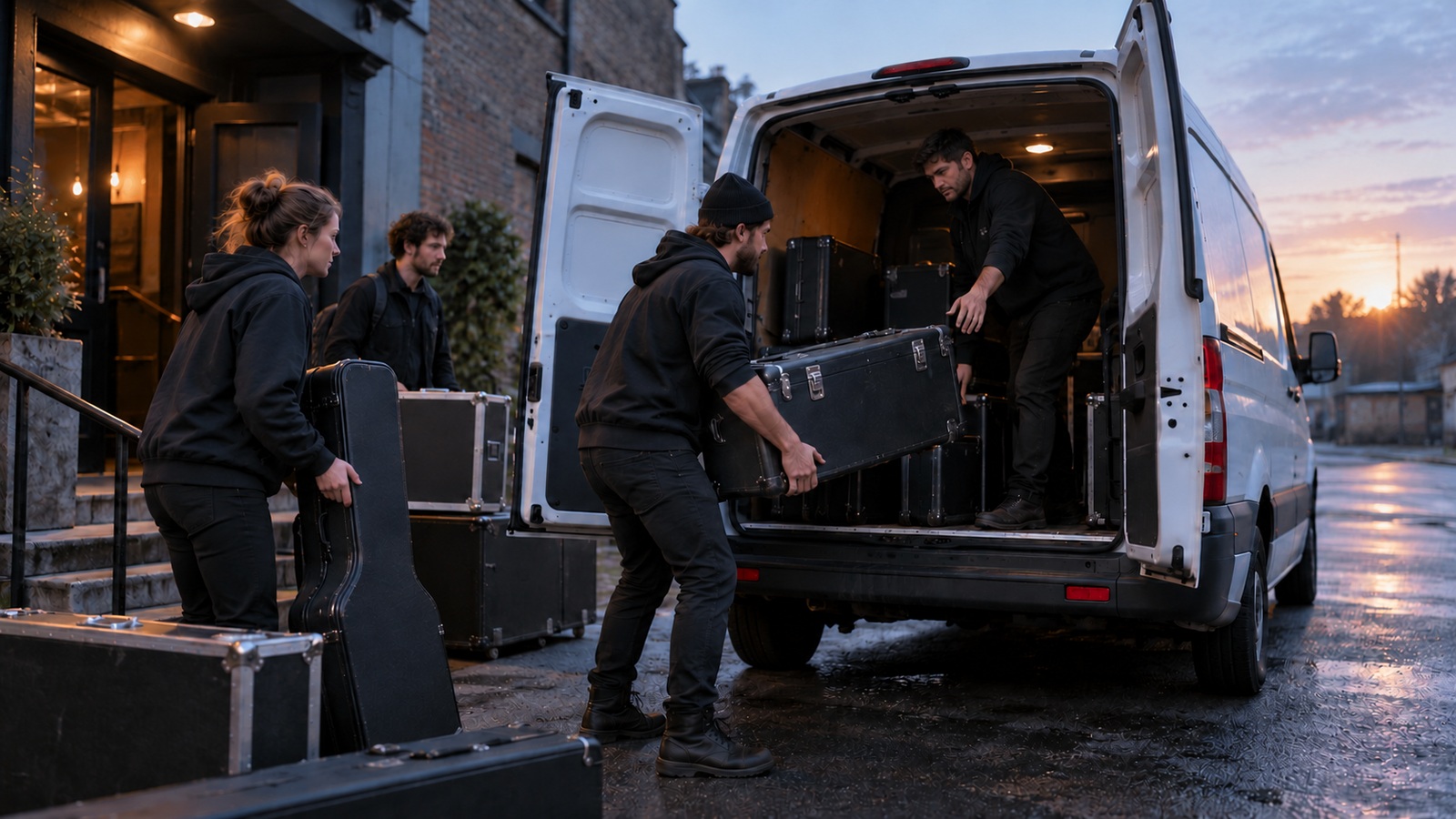
A concert can involve AI before a fan sees a ticket, before a truck reaches the venue, and after the final song has ended. Teams may explore demand forecasts, assisted marketing, visual generation, or ways to organize the information that keeps a show moving. Onstage, the possibilities range from imagery prepared in advance to systems that respond during a performance. These uses do not all have the same consequences, and a digital spectacle is not automatically evidence that AI is making the music live. Fans need clear descriptions of what they are buying, while artists need a practical way to judge whether a technology helps the show. This article follows the concert from planning to performance and audience experience. It separates useful possibilities from claims that require proof, explains the human decisions behind the systems, and shows why reliability, consent, and honest communication matter as much as the novelty of an effect.
Understand which job the system actually performs
The label AI can cover very different jobs in a concert workflow. A language assistant might summarize production correspondence, a prediction model might estimate demand, and a generative system might create visual material. None of those functions proves that a performance is being composed or altered in real time. Ask what enters the system, what it produces, and which person decides whether to use the result.
Also distinguish AI from established automation. A lighting cue triggered at a known point, a backing track, and a pre-rendered video can operate through carefully programmed systems without generating new content. A show may combine several approaches at once. Understanding those layers makes it easier to assess a specific claim instead of accepting a broad description such as intelligent or immersive.
For artists, the most useful starting point is a named production problem. Perhaps the team loses time extracting travel details from messages or needs to prepare multiple visual concepts for discussion. Evaluate a proposed tool against that problem and the resources available to supervise it. A small administrative improvement can be more valuable than a dramatic effect that introduces an unreliable dependency.
Planning tools can assist decisions without knowing the whole tour
Demand estimates and audience information may help a team compare possible cities, capacities, or promotion strategies. Those estimates depend on their inputs and assumptions, including whether online attention translates into people willing to attend a particular show. A touring act also faces guarantees, venue availability, routing, local competition, and crew constraints. A model can support the discussion without supplying a complete booking decision.
Keep verified operational information separate from generated suggestions. Travel time estimates need checking against the actual route, vehicle, schedule, and local conditions. A plausible venue description is not confirmation of availability or technical capability. Treat any assistant-produced itinerary as a draft until the responsible people verify the details with the relevant providers.
Cvent’s AI sourcing description illustrates a planning task: an organizer states venue requirements in ordinary language and receives suggested venues. That is a shortlist operation, not an approved concert booking. The promoter still checks capacity, access, technical needs, costs, and availability against the actual show. For artists, the useful distinction is concrete: assistance may help find candidates before a human team commits to the room where fans will hear the performance.
Artists should also understand whose data informs the recommendation. An audience estimate based on broad social attention is different from actual local ticket history, and neither guarantees a particular room will sell. Preserve the distinction when discussing a forecast with a promoter or manager. The most confident looking chart still needs a person who can explain what would make its conclusion unreliable.
Visual production is becoming more flexible
Generative tools can help a creative team explore visual directions before commissioning finished stage content. They may shorten the distance between a verbal idea and a concept the artist can discuss with designers. That does not remove the later work of turning an image into a show-ready asset. Scale, color, motion, sightlines, timing, and delivery requirements all affect whether a promising concept works in a venue.
Real-time stage visuals also deserve precise descriptions. Disguise describes stage visualization, timeline control, integrations, and motion-triggered graphics within its live-entertainment workflow. Those capabilities illustrate how much coordination sits behind a responsive show, but they do not establish that every visual is AI-generated. The creative and technical teams need to explain the particular system being proposed.
Digital performers change the presentation, not the need for clarity
A virtual performer can be an animated character, a digital representation of a real artist, or another kind of visual presence. The audio underneath may involve live musicians, prerecorded performances, synthesis, generation, or a combination. Fans should not have to infer those facts from the appearance of the figure onstage. A useful description names the performance components plainly.
ABBA Voyage offers a concrete example of why those distinctions matter. Its official explanation describes digital avatars created with the band using motion capture and visual effects. The concert also has a live band. Calling the entire experience an AI concert would hide important information about how the show is actually made.
For an artist considering a digital likeness, the agreement needs more detail than permission to make an avatar. The parties should discuss approved uses, territories, duration, revisions, promotion, and what happens when the relationship ends. Voice and likeness uses can raise different issues from the rights in a song or recording. Obtain qualified advice for the actual agreement and jurisdiction rather than relying on a tool’s summary of a generic contract.
Responsive systems still need a rehearsed show
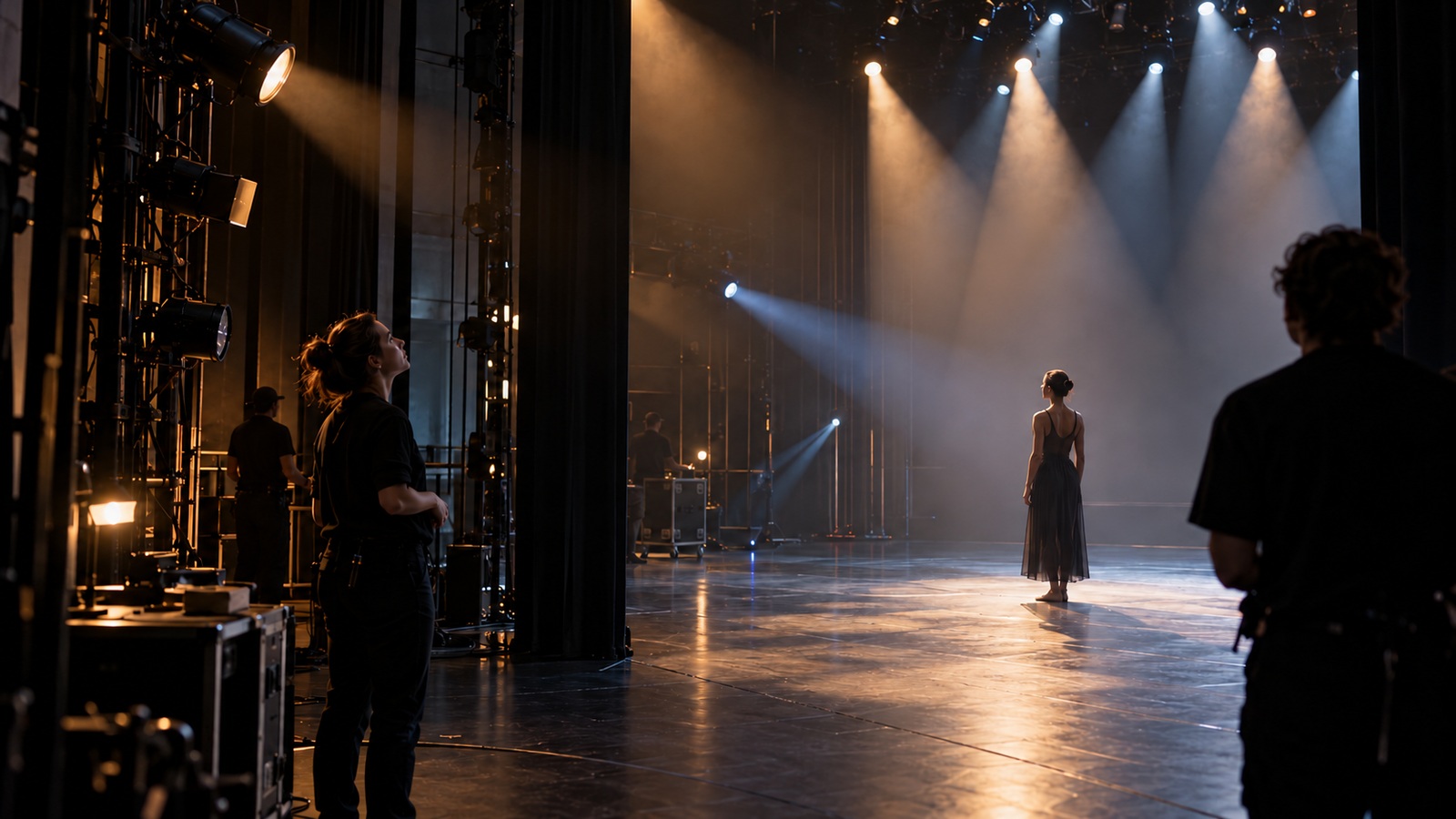
Some systems can react to musical or physical inputs, such as movement, sound features, or a performer’s control. A useful response must arrive at the right moment and behave within boundaries the team understands. A visually striking demonstration in a controlled room does not establish that the system will work under the heat, noise, network conditions, and schedule of a live event. Rehearsal needs to test the actual production environment as closely as practical.
Define what the performer controls and what remains unpredictable. If a singer changes timing, the visual system may need to follow, wait, or fall back to a stable sequence. The team should know how to recover when an input disappears or an output becomes unsuitable. A human operator with a clear override can be more important than another layer of automation.
Keep a simpler version of the show ready. That might mean approved playback content, a reduced visual state, or a performance that continues comfortably without the responsive element. Practice the transition instead of leaving it as an informal promise. Reliability is part of the artistic experience because a performer who trusts the system can focus more fully on the audience.
Evaluate whether the response serves the music. An effect that constantly reacts can become exhausting, especially when a song needs stillness or a clear focal point. Design moments of restraint alongside spectacle and listen to the performers who must work within it. The best technical choice may be the one the audience notices only through a stronger sense of connection.
Ticketing and communication need careful claims
Ticket prices can change through several mechanisms, and a changing price alone does not prove that AI set it. Different seat locations, ticket types, packages, resale offers, and organizer decisions can produce very different prices on the same event page. Ticketmaster’s pricing explanation assigns pricing and distribution decisions to event organizers. That is the company’s account of the process, not proof that every event follows the same strategy.
Fans should read the actual offer and decide on a total budget before entering a pressured purchase. Artists and promoters should explain the ticket categories and any relevant conditions clearly. If a team uses automated forecasting or pricing assistance, it still needs people accountable for the policy and communication. A technical description does not answer a fan’s concern about affordability or fairness.
Audience interaction brings permission and access issues
YouTube’s automatic-caption guidance supplies an audience-facing example for eligible live streams, with English-only live-caption availability stated in the current guidance. A remote fan may use those captions to follow spoken introductions, but music, overlapping voices, names, and poor audio can reduce recognition quality. Test the actual feed and provide dependable essential information through an appropriate route. Automatic speech recognition and a carefully prepared lyric display serve different needs; the presence of one should not be used to promise accurate text for every part of a concert.
Interactive experiences may also collect information through cameras, microphones, phones, or participation forms. Explain what is collected, why it is needed, and how people can understand their choices. Avoid assuming that buying a ticket implies agreement to every possible data use. The event team should obtain appropriate legal and privacy review for the specific system and local requirements.
Design participation so it does not make a phone, a particular account, or public visibility the only route to enjoying the show. Some fans prefer to watch without contributing data or appearing in generated content. A clear alternative can preserve the communal experience. Inclusion is a production decision that needs attention before the audience arrives.
Make the handover understandable to the whole crew
A new system introduces a communication task as well as a technical task. The person who designed an effect may understand its limits, while the touring operator sees only a confusing set of controls. Prepare a practical handover that explains normal behavior, warning signs, and the simplest safe recovery. Test that explanation with someone who did not build the system.
Keep the instructions tied to show responsibilities. A stage manager needs to know whether a delay affects an entrance, while a visual operator needs to know which output can be replaced. Avoid burying these decisions inside a long vendor document. The working version should help the crew act under time pressure, with detailed references available when needed.
Include an actual rehearsal of the handover rather than assuming a written checklist is enough. Ask another operator to run the relevant sequence and recover from a deliberately introduced problem. Observe where they hesitate or need information the document omitted. Those moments reveal weaknesses while the production still has time to fix them.
Account for changes during the run. A revised cue, new input source, or updated content file can invalidate an earlier explanation. Give one person responsibility for keeping the approved information current and make version changes visible to the crew. A technically impressive system becomes practical only when the people operating it share the same understanding of the show.
Judge the result by the concert it makes possible
After a show, review a technical experiment against the reason for introducing it. Did it save preparation time, help the performer communicate an idea, improve access, or create a memorable musical moment? Include the crew’s workload, failure recovery, and audience feedback in that review. A result that looked spectacular online may have created problems for people in the room.
These examples change different parts of the event. Venue sourcing affects the organizer’s shortlist, digital-avatar production affects what appears on stage, and automatic captions affect how a remote audience follows speech. Judge each against that job rather than calling the whole concert AI-powered. A useful review can identify the actual benefit, the failure that mattered, and who will correct it next time. The measure of progress is a concert people can follow and a production the crew can reliably deliver.