Make development visible between releases
The strongest sign that an artist is developing is not a busier release calendar. It is a better decision: a song that finally earns its place in the set, a performance that holds attention without production tricks, or a clearer understanding of who comes back to listen. AI can help you organize the evidence behind those decisions, but only after you decide what a stronger career means for you. An artist seeking a dependable local audience has a different development problem from a producer building a collaborative catalog. Both need a way to connect daily work with longer-term direction. This article treats artist development as a repeated cycle of making, performing, listening, and adjusting. It shows where AI can reduce administrative friction or widen your perspective, how to keep its feedback grounded in real music, and why the final measure should be greater artistic capability rather than a larger pile of generated output.
Define a career direction that can guide this season
Begin with the kind of working life you want your music to support. Consider how much you want to perform, whether you prefer solo work or collaboration, and what resources you can reliably commit. An assistant can help organize these preferences into a draft plan, but it cannot choose your tolerance for travel, financial uncertainty, or public exposure. Those choices shape which opportunities deserve attention.
Translate that direction into one development priority for the next few months. A new live act might need a convincing short set before pursuing a larger release campaign. A songwriter with strong demos might need reliable co-writing relationships and better delivery habits. A narrow priority gives you a reason to decline attractive activities that do not address the current limitation.
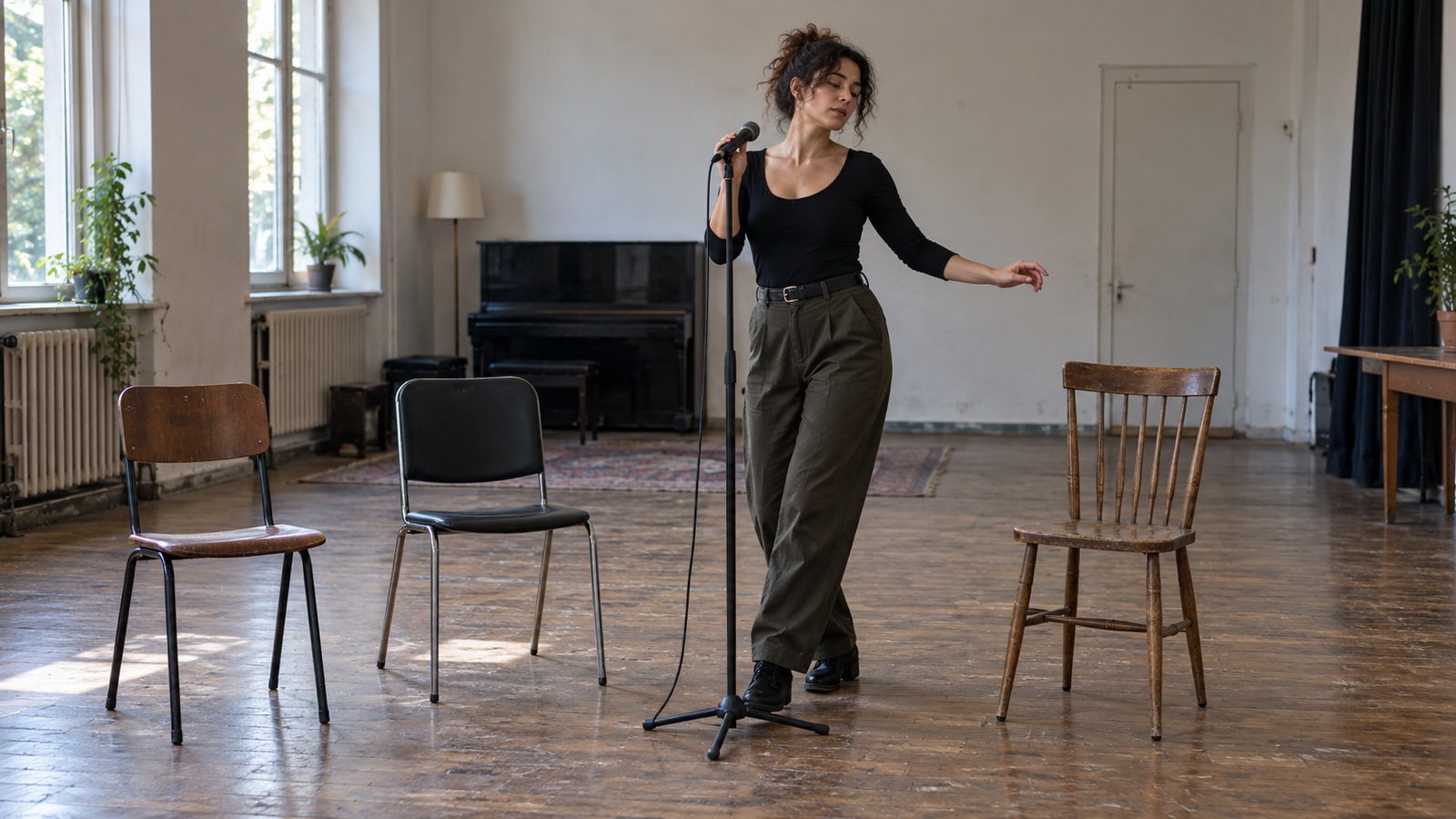
Give one priority an observable result. Imagine an artist whose three-song opening set loses momentum between songs because of long setup pauses. The development goal is to perform that same set with prepared transitions and a deliberate final ending. Keep the initial rehearsal recording as a reference and agree what the next recording should reveal. This is more useful than promising a stronger stage presence without defining what changes. The improvement concerns how the audience experiences a complete set, rather than the number of new tools the artist learns.
Build an honest picture of your present work
Collect a small selection of representative songs and performances, including work that exposes your weaknesses. Add factual context such as recording dates, collaborators, venues, and the circumstances in which each piece was tested. Use AI to organize your written observations or identify recurring themes in feedback you have permission to share. Keep original recordings and comments available so a tidy summary cannot replace the evidence.
Separate observations from interpretations. A listener leaving during a quiet song is an observation; deciding that your audience dislikes quiet music is an interpretation requiring more evidence. Ask an assistant to suggest alternative explanations instead of producing a confident diagnosis. The distinction is especially useful when a disappointing show or release tempts you to change your entire artistic direction.
Choose repertoire that reveals progress
A developing catalog needs more than a growing count of finished tracks. Select songs that demonstrate different strengths while still belonging to the same artist. One may depend on storytelling, another on rhythmic authority, and another on a compelling live vocal. Use a simple written inventory to identify gaps, then decide whether to revise existing material or write something new.
AI can help compare your own descriptions of those songs and reveal that several serve the same purpose. It can also propose rehearsal experiments, such as performing a dense track with fewer instruments to expose its core. These are hypotheses to test through music. Do not let a text-based judgment decide that a song lacks emotional force when the assistant has never heard the performance or understood its context.
Revisit the inventory after a real test. A song that looked like an obvious opener may require too much explanation, while a modest demo may become the set’s most direct connection with listeners. Record why you changed its role and what you learned about your strengths. Over time, those decisions become a useful artistic history rather than a folder of abandoned drafts.
Protect space for material that is still unfamiliar. Development involves learning to perform something before its value is immediately apparent. Distinguish a song that needs preparation from one whose underlying idea no longer interests you. A short review deadline helps you avoid both premature rejection and endless polishing.
Connect practice to the next performance
Build rehearsal around the conditions in which the music will actually be heard. Practice transitions, speaking, entrances, endings, and recovery from mistakes alongside the songs themselves. An assistant can turn your observations into an ordered rehearsal agenda or help you allocate limited time. The useful output is a session you can perform, not an elaborate schedule that assumes unlimited energy.
Rehearse the transitions as their own musical material. Decide which instrument or spoken cue carries the change, prepare the required sound before the previous song ends, and record the complete sequence without stopping. If you use an assistant to organize the observations, supply the actual timings and comments; do not ask it to invent what the room felt. Then compare the new recording with the first. A shorter pause is useful only if the next entrance is confident and the music still has room to settle.
Ask another musician to review problems that depend on physical technique, ensemble interaction, or room sound. AI feedback can miss the cause of an issue even when it describes the symptom convincingly. A teacher may notice tension, an arrangement conflict, or an impractical part that a transcript cannot reveal. Use the tool to prepare a more focused conversation with that person.
Learn from listeners without outsourcing your identity
Invite specific responses after a show or private listening session. Ask which moment remained memorable, where attention drifted, and what the listener expected to hear next. Keep the wording open enough for disagreement instead of asking whether they liked the change you already favor. With permission, an assistant can group the responses into recurring observations and outliers.
Read the original comments before making a creative decision. A summary can flatten useful differences between a devoted listener, a casual visitor, and another performer. Repeated requests for a familiar song may reflect attachment rather than a rejection of new work. The aim is to understand the relationship between your intention and the experience people report.
Look for behavior that supports the comments. People returning to another show, bringing a friend, or asking about a particular song provide a different kind of evidence from a polite compliment. Record those observations without collecting unnecessary personal information. You can develop a clearer audience picture while respecting the people who are helping you learn.
Keep an area of artistic commitment that does not need immediate approval. If intimate storytelling is central to your work, a weak response may call for better delivery or a better setting rather than abandoning the trait. Development combines openness with continuity. Otherwise, every small sample of feedback can pull the project toward a different identity.
Use audience data as context for a musical decision
Streaming dashboards can show patterns worth investigating, but they do not explain every listener’s motivation. Spotify’s audience segments distinguish active listening from programmed sources, which is more informative than treating all exposure as the same relationship. Keep time windows and metric definitions attached to any data you summarize. An assistant that loses those definitions may turn a modest change into a misleading career story.
Pair a data pattern with a limited experiment. If a particular song brings people back, you could feature it in a short live video or explain its writing process to interested listeners. Decide beforehand what would count as useful evidence and how long you will observe the result. Avoid rewriting the entire release plan because one chart moved after an unrelated event.
Make collaboration easier through reliable preparation
A career often strengthens when other people can work with you confidently. Deliver files with clear versions, communicate realistic deadlines, and arrive knowing what kind of feedback you need. AI can help turn a messy session recap into a concise task list, provided everyone agrees on what information may be shared. Read the result for changed commitments or invented decisions before sending it.
Discuss creative roles and credits before a project becomes difficult to untangle. A suggested melody, a recorded performance, a production contribution, and an administrative task may need different treatment in the working agreement. Tools do not remove the need for that conversation. Keep the agreement and the actual contribution records together so later decisions rest on shared understanding.
Develop a small network of complementary judgment. A vocal teacher, a trusted producer, a booker, and a listener outside your immediate circle can notice different problems. An assistant can help you prepare relevant material for each conversation without pretending those perspectives are interchangeable. Strong development makes your human collaborations more focused rather than making them unnecessary.
Protect the conditions that let development continue
An ambitious plan can fail because it assumes every week will be unusually productive. Build your commitments around a realistic baseline that includes paid work, family responsibilities, travel, and ordinary interruptions. An assistant can help reorganize a calendar, but it should not be allowed to fill every available hour. Space to recover and listen is part of the working process.
Set a small minimum for difficult weeks. That might be one focused rehearsal, a short writing session, and one necessary collaborator message rather than the entire ideal schedule. Maintaining continuity is different from pretending every week has equal capacity. A plan with a workable minimum is easier to resume after a setback.
Watch for administrative activity that imitates development. Rewriting a biography, refreshing a content calendar, and generating another campaign can all feel productive while the central performance remains underprepared. Return to the priority you identified at the beginning of the cycle. Ask whether the next hour will improve that capability or merely produce more material to manage.
Keep spending connected to a concrete use. A short course, a rehearsal space, or specialist feedback may address a limitation more directly than another subscription. Compare the likely benefit with the time needed to make use of it. A resource becomes valuable through application, not through its presence in your account.
Allow the plan to change when life or the work supplies new evidence. Record the reason and choose a revised commitment you can actually meet. This keeps adaptation separate from quietly abandoning a difficult goal. Sustainable artist development depends on honest decisions about capacity as well as enthusiasm for the music.
Review the cycle and change the next commitment
At the end of a development period, compare your present work with the baseline rather than with a stranger’s highlight reel. Listen to the earlier rehearsal, reread the first plan, and identify decisions that became easier. Record what actually improved, what remained difficult, and which activity consumed time without teaching you much. A candid review provides a better next brief than a general promise to work harder.
In the hypothetical set, suppose the transitions now work but the last song’s ending remains uncertain. Keep the successful handoffs and make the ending the next rehearsal priority. If a trusted listener still loses the thread between songs, revisit the transition cue instead of adding a fourth song to disguise the problem. This is a complete development loop: the original weakness defined the intervention, the recording supplied evidence, and the evidence changed the next commitment. Artist growth becomes visible in the performance rather than only in its planning documents.