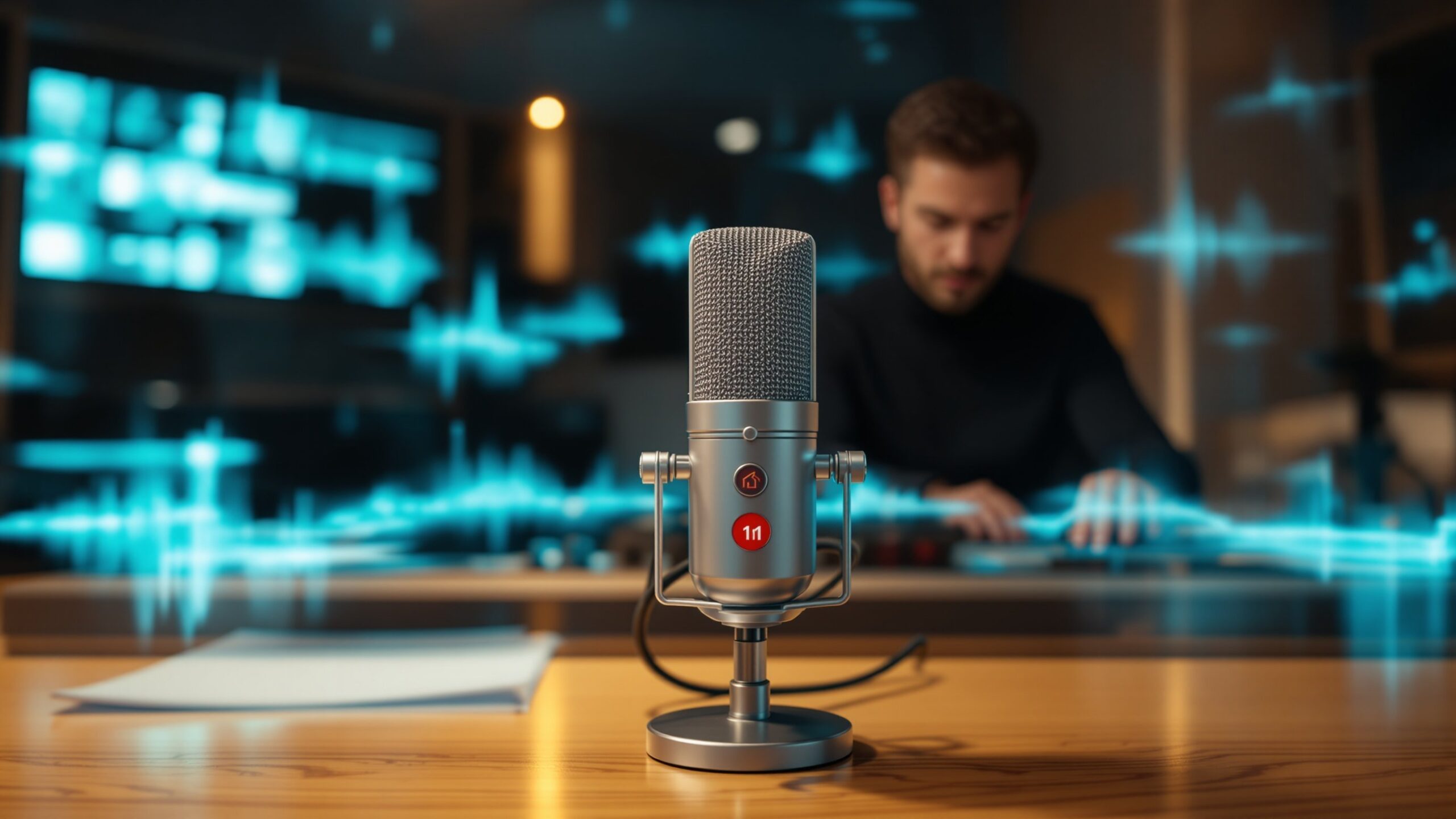
In 2026, celebrity voice models have moved from novelty experiments to highly convincing digital performances that blur the line between authentic and artificial. What began as viral social media clips and experimental text-to-speech demos has evolved into an advanced ecosystem of AI voice cloning tools capable of reproducing tone, cadence, emotional nuance, and even signature vocal quirks. The question many people are asking now is not whether these models exist, but how accurate they truly are. From film studios to independent creators, from advertising agencies to podcast producers, synthetic celebrity voices are increasingly present in modern media. Advances in generative AI, deep learning, and neural audio synthesis have dramatically improved realism. Yet accuracy is a layered concept. It includes not only how closely a voice sounds like a specific person, but how well it captures emotional expression, improvisation, cultural context, and unpredictability. To understand how accurate celebrity voice models are in 2026, we need to examine how they work, how they are trained, where they succeed, where they fail, and what ethical and legal frameworks are shaping their use.
A: Usually similarity in timbre + cadence; true identity-level matching is a higher bar.
A: Drift and prosody errors accumulate over time—breath, pacing, and vowels start to wander.
A: Prosody: stress, pauses, and emphasis that don’t match natural speech habits.
A: Sometimes for simple phrases, but sustained notes, vibrato control, and style transitions are harder.
A: Use a fixed script, A/B against a real recording, and test multiple emotional and speed conditions.
A: They help, but results vary with compression, noise, and edits—use them as one signal among many.
A: Text normalization and phoneme mapping can be off—especially with names, slang, or code-switching.
A: Not always—clean audio exposes artifacts; moderate room tone can actually feel more natural.
A: Recognition triggers—people may believe it’s real based on familiarity, not technical accuracy.
A: Use licensed voices, original performers, or clearly labeled synthetic characters instead of real-person impersonations.
The Evolution of Celebrity Voice Cloning
Voice cloning technology has progressed rapidly over the last decade. Early text-to-speech systems produced robotic, flat, and easily distinguishable synthetic audio. By contrast, today’s AI voice models use large-scale neural networks trained on thousands of hours of recorded speech to analyze pitch contours, breathing patterns, speech rhythms, vowel shaping, consonant timing, and emotional inflection.
By 2026, many AI voice platforms can generate speech that is indistinguishable from a real celebrity in short-form audio clips. These systems rely on transformer-based architectures similar to those used in large language models but adapted specifically for audio waveform synthesis. Instead of predicting words alone, they generate fine-grained acoustic features in real time.
Modern celebrity voice models no longer just imitate tone. They replicate micro-pauses, vocal fry, laughter styles, whisper transitions, and stress patterns that define a recognizable public figure. For example, subtle rhythmic delivery or a particular way of elongating vowels can be replicated with startling precision.
However, progress has not been uniform across all use cases. Accuracy varies depending on how the model is trained, how much high-quality source audio is available, and whether the celebrity has a consistent vocal persona or a highly dynamic one.
What Does “Accuracy” Really Mean?
When evaluating celebrity voice models in 2026, accuracy involves several dimensions: First, there is tonal similarity. Does the synthetic voice sound like the celebrity in pitch and timbre? This is often the easiest metric to achieve because AI can replicate frequency characteristics with remarkable fidelity. Second, there is stylistic consistency. Does the AI replicate the celebrity’s speech rhythm, pacing, and emotional range? Some public figures have distinct vocal signatures that make this easier. Others vary dramatically between interviews, performances, and private conversations.
Third, there is contextual intelligence. Can the voice model respond naturally in conversation? Does it maintain character under improvisation? This is where accuracy becomes more complex. A perfect vocal sound is not enough if the personality behind it feels off. Finally, there is situational realism. Does the voice respond differently in high-energy environments versus intimate moments? Can it simulate breathless excitement, sarcasm, or vulnerability in a way that feels authentic?
In 2026, many celebrity voice models achieve high tonal similarity and strong stylistic imitation. Contextual and situational realism, however, remain areas of ongoing development.
Technical Advances Driving 2026 Accuracy
The improvement in celebrity voice model accuracy can be traced to several technological breakthroughs.
One major factor is multimodal training. Modern systems do not rely on audio alone. They analyze video interviews, facial expressions, and contextual cues to better model emotional tone. By pairing vocal signals with facial muscle movements, AI systems learn how emotion alters speech.
Another advancement is few-shot learning refinement. Instead of requiring massive datasets, some models can adapt to new audio samples quickly, refining a celebrity voice model with only minutes of fresh recordings. This helps maintain up-to-date vocal traits as a celebrity’s voice changes over time.
Neural vocoders have also become more sophisticated. In 2026, high-resolution waveform generation produces richer texture, reducing the “digital sheen” that once betrayed synthetic voices. Subtle mouth noises, breath sounds, and dynamic range shifts are now integrated automatically.
Additionally, real-time adaptive synthesis allows voice models to modify tone mid-sentence in response to text meaning. If a script implies surprise, the system adjusts pitch rise accordingly. If a line suggests seriousness, vocal warmth and pacing shift to match.
These improvements mean that in controlled settings, many celebrity voice models are between 85 to 95 percent perceptually accurate in blind listening tests involving short-form audio.
Where Celebrity Voice Models Perform Best
In 2026, celebrity voice models are most accurate in structured, scripted content. Commercial voiceovers, narration, promotional announcements, and audiobook-style readings are areas where AI performance is highly convincing.
Short video clips, podcast intros, and advertising spots often achieve near-perfect mimicry. In many cases, listeners cannot reliably distinguish between a licensed AI-generated celebrity voice and the real person, especially when the clip is under 30 seconds. The accuracy is also strong in emotionally neutral contexts. Calm narration, informative speech, and moderately expressive delivery are well within the capabilities of current models.
Gaming and virtual environments have also embraced AI celebrity voices. Interactive NPCs modeled after public figures can maintain consistent tone across branching dialogue paths, delivering realistic responses without sounding repetitive. In these structured applications, accuracy is remarkably high.
Where Accuracy Still Breaks Down
Despite dramatic progress, celebrity voice models are not flawless. Spontaneous humor, long-form emotional monologues, and dynamic interviews remain challenging. Over longer durations, small inconsistencies can accumulate. Slightly unnatural transitions between emotional states may become noticeable. Another limitation appears in highly idiosyncratic speech patterns. Some celebrities use unpredictable cadence shifts, improvised phrasing, or unique vocal distortions that are difficult to replicate consistently. Accents and code-switching also present challenges. If a celebrity frequently shifts between dialects or languages, the model may struggle to maintain natural fluidity. Finally, emotional depth is still an area where human performance surpasses AI. While 2026 models can simulate sadness or excitement, the nuanced layering of subtle emotional undertones may lack authenticity during extended performances. In other words, AI can sound like a celebrity, but embodying the celebrity remains a more complex challenge.
The Role of Licensing and Ethical Controls
Accuracy alone does not determine how celebrity voice models are used. By 2026, legal and ethical frameworks have evolved significantly.
Many celebrities now license their voices to AI platforms under controlled agreements. These contracts specify usage boundaries, content categories, and revenue sharing structures. Licensed models tend to be more accurate because they are trained on authorized, high-quality datasets.
Unauthorized cloning, once rampant, is increasingly regulated. Digital watermarking and audio fingerprint detection tools are widely used to identify synthetic voices. Regulatory bodies in multiple countries require disclosure when AI-generated celebrity voices are used in commercial content.
Accuracy has therefore become intertwined with authenticity. Audiences not only care whether a voice sounds real, but whether it is officially sanctioned.
Impact on Entertainment and Media
The entertainment industry has embraced celebrity voice models in several ways. Film studios use AI voice synthesis for post-production dialogue corrections. Instead of rescheduling actors, directors can adjust lines digitally while preserving vocal consistency. Music producers experiment with AI-assisted collaborations, though this remains controversial. Voice models can generate demo tracks in the style of well-known performers, allowing creative exploration before involving human artists. Podcasting and virtual influencers have also benefited. AI-generated celebrity-style voices can host themed segments, create interactive experiences, or provide localized language versions of global content. However, industry professionals emphasize that AI is augmenting rather than replacing real performers. The most successful projects in 2026 use voice models as tools, not substitutes.
Public Perception in 2026
Public awareness of AI-generated voices has increased significantly. Listeners are more skeptical and attentive to disclosure labels. Surveys indicate that while many people are impressed by the realism, they still value authentic human performance for emotionally significant content.
Trust plays a central role in perceived accuracy. If audiences know a voice is synthetic, they often listen more critically. When disclosure is absent, realism can feel more convincing.
Interestingly, younger audiences who grew up with AI content tend to perceive voice models as normal parts of digital media. For them, accuracy is judged less by perfect realism and more by whether the experience feels engaging and seamless.
Are Celebrity Voice Models Indistinguishable From Real Voices?
The honest answer in 2026 is that it depends on context. In short, scripted clips under controlled conditions, many celebrity voice models are effectively indistinguishable from real recordings to the average listener. In long-form emotional performances or unscripted exchanges, subtle artifacts can still emerge. Professional audio engineers may detect spectral inconsistencies or micro-timing irregularities. Casual listeners, however, are often unable to tell the difference without side-by-side comparison. The gap between synthetic and authentic voices has narrowed dramatically, but it has not completely closed.
The Future of Celebrity Voice Accuracy
Looking beyond 2026, continued improvements are expected in emotional modeling and real-time conversational depth. As AI systems become better at integrating semantic understanding with acoustic generation, contextual realism will likely improve. Advances in personalized AI training may also allow celebrities to co-create their digital voice doubles, refining tone and personality intentionally. Instead of merely copying past recordings, future models may evolve alongside the celebrity’s career. At the same time, ethical governance will remain central. Transparency, consent, and digital identity protection will shape how these technologies develop.
How Accurate Are Celebrity Voice Models in 2026?
Celebrity voice models in 2026 are highly accurate in tone, rhythm, and short-form performance. They can convincingly replicate many vocal characteristics that define public figures. In structured, scripted environments, their realism often surpasses casual detection thresholds.
However, full emotional authenticity, improvisational spontaneity, and complex personality embodiment remain areas where human voices still hold an edge. The technology is no longer experimental. It is mature, commercially viable, and widely integrated into media workflows. Yet it is not perfect. Accuracy is impressive, but not absolute.
In 2026, celebrity voice models are best understood not as flawless replicas, but as powerful digital instruments capable of astonishing realism under the right conditions. As AI continues to evolve, the line between imitation and identity will grow even thinner, raising profound questions about creativity, authorship, and the future of human expression.